Plastic Jars for Every Industry: Uses, Sizes and Benefits
October 5, 2026
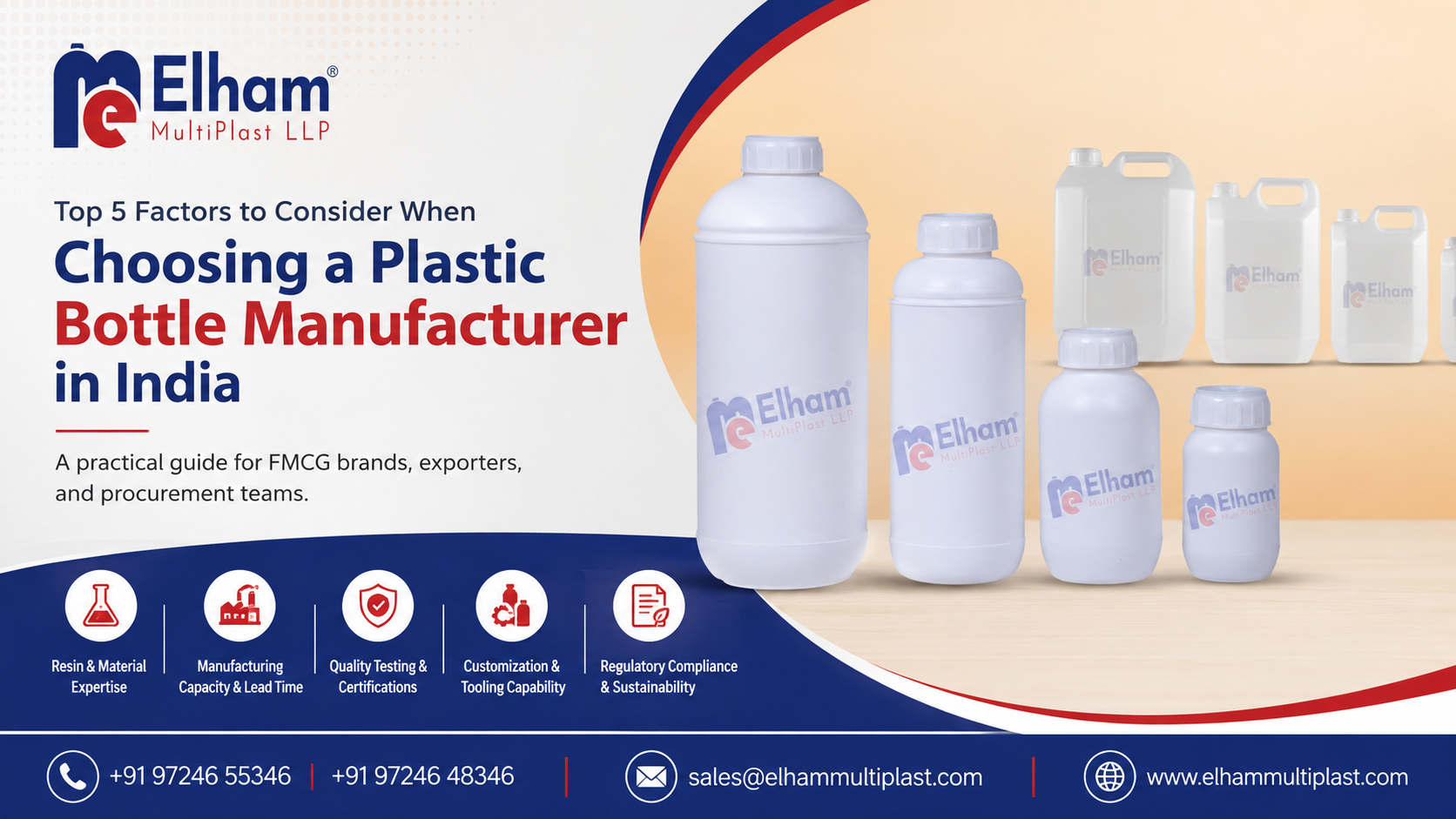
Every mismatched bottle order costs more than money. A weak seal, an inconsistent neck fit, or a delayed shipment can hold up a full production run and damage a brand’s reputation before the product ever reaches a shelf. That is why choosing the right plastic bottle manufacturer in India is not a small procurement task. It is a decision that shapes product quality, delivery reliability, and cost of ownership for years.
This guide is built for Indian FMCG brands, exporters, and procurement teams who need a working framework, not a sales pitch. Below are the five factors that consistently separate dependable manufacturers from risky ones, followed by a practical checklist you can use in your next supplier review.
When evaluating a plastic packaging company in India, assess these five areas before signing any purchase order:
Not every plastic resin behaves the same way once it touches your product. A HDPE bottle supplier works with a rigid, chemically resistant material well suited to detergents, lubricant oils, agrochemicals, and pesticides, because HDPE resists solvents and holds up under repeated handling. PET, on the other hand, is the material of choice when a brand needs a transparent, glossy finish, common in edible oils, personal care liquids, and food contact packaging. PP sits between the two, offering higher heat resistance for products that face hot filling or sterilization.
A manufacturer that only understands one resin family will often push it onto every product, regardless of fit. Ask directly which resin grades a supplier stocks, whether they blow mould or injection mould, and whether they can explain, in plain terms, why a specific resin suits your formulation. A PET bottles manufacturer that also runs HDPE lines gives you room to diversify packaging without switching vendors as your product range grows.
Capacity claims are easy to make and hard to verify. A genuine bulk bottle supplier in Gujarat should be able to show you more than one production line, ideally spread across more than one facility, so a breakdown or a seasonal demand spike at one unit does not stall your entire order. Ask how many blow moulding and injection moulding machines are running, what the average turnaround is for stock designs versus custom moulds, and how the supplier handles concurrent orders from multiple clients during peak season.
Lead time promises should be checked against actual dispatch history, not just quoted numbers. A supplier confident in its own capacity will willingly share past delivery timelines for orders similar in size to yours, and will be transparent about how monsoon logistics or raw material shortages could affect a schedule.
Quality claims mean little without documented, repeatable testing. Before finalizing any supplier, ask to see records for the following checks, which form the baseline for reliable rigid plastic packaging:
A manufacturer that runs these tests as standard practice, and can show you sample reports, is signaling a mature quality system rather than an ad hoc one. You can review the exact testing protocol Elham MultiPlast follows on its quality assurance page, which outlines how each batch is checked before dispatch.
Stock bottles work for early stage brands, but most FMCG companies eventually need a custom bottle manufacturer that can execute on neck finish, embossing, color matching, and mould design. Ask how the supplier handles tooling cost for a new mould, whether that cost is amortized across a minimum order volume, and how long a first sample typically takes to produce and approve.
Minimum order quantities vary widely depending on whether you are ordering from existing stock moulds or commissioning a new design. Stock designs can often be sourced in smaller quantities, while a dedicated mould usually requires a higher volume commitment to offset the tooling investment. A transparent supplier will walk you through this trade off rather than quoting a single flat MOQ for every scenario.
India’s Plastic Waste Management Rules and the Extended Producer Responsibility framework increasingly shape what brands can package and how. A credible plastic packaging company in India should understand EPR registration requirements, be able to discuss recyclability coding on the bottles it produces, and offer post consumer recycled resin options where your brand’s sustainability commitments call for them.
For food contact and pharmaceutical applications, confirm that raw materials meet food grade or pharma grade compliance and that the supplier can provide material certificates on request. Suppliers serving industries such as agro chemical and pesticide packaging or veterinary bottles should also be conversant with the specific labeling and containment norms those categories carry.
For exporters and pan India brands, packaging quality only matters if the product actually arrives intact. Ask how a supplier handles Full Container Load shipments, what packing standards are used to prevent transit damage, and whether they have direct experience dispatching to the states or countries you serve. A manufacturer with an established export history and multiple dispatch points is generally better positioned to manage this than one shipping outside its usual radius for the first time.
| Factor | What to verify | Red flag to avoid |
| Material expertise | Resin grades stocked, moulding process used, technical reasoning for fit | One resin pushed for every product type |
| Capacity and lead times | Number of units and machines, verifiable dispatch history | Lead times quoted with no past order proof |
| Quality testing | Torque, leak, drop, and burst test records per batch | No documented testing process on file |
| Customization and tooling | Clear MOQ and tooling cost structure for new moulds | Vague or shifting MOQ depending on the conversation |
| Compliance and sustainability | EPR awareness, recyclability coding, food or pharma grade certificates | No answer on EPR or recycled content options |
Gujarat’s industrial belt, including Sabarkantha and Surat, has grown into one of India’s most active clusters for rigid plastic packaging. Access to resin suppliers, established logistics corridors, and a dense base of skilled moulding operators makes it possible for a plastic bottle manufacturer in Sabarkantha to run efficient, cost competitive production while still dispatching reliably across India and to international markets. Brands sourcing from this region typically benefit from shorter tooling turnaround and more competitive per unit pricing than they would find in smaller, isolated production hubs.
Request resin data sheets and ask which grade applies to your product category.
Ask for torque, leak, drop, and burst test reports from a recent batch.
Confirm MOQ separately for stock designs and for any new custom mould.
Get a written lead time with reference to at least one comparable past order.
Verify EPR registration status and ask about recycled content options.
Order a pilot batch before committing to a full production run.
MOQs depend on whether you use an existing stock mould or commission a new one. Stock designs can often be ordered in smaller batches, while a new custom mould usually requires a higher volume to offset tooling cost. Ask your supplier to quote both scenarios separately.
PET suits products that benefit from a transparent, glossy presentation, such as edible oils and personal care liquids. HDPE is generally preferred for detergents, lubricants, and agrochemicals because of its chemical resistance and opacity. The right choice depends on your formulation and shelf presentation needs, so a supplier that offers both gives you flexibility as your range expands.
Ask for documented torque, leakage, drop, and burst strength test reports, and request a pilot batch before committing to a full production run. A supplier confident in its process will not hesitate to share this data.
Yes, provided the supplier has an established export and pan India dispatch history. Ask specifically about Full Container Load handling, past delivery timelines to your region, and how they manage packing to prevent transit damage.
At minimum, expect material certificates confirming food or pharma grade compliance where relevant, clarity on EPR registration, and information on recyclability coding. Brands with sustainability commitments should also ask about post consumer recycled resin availability.
Choosing a plastic bottle manufacturer in India is a decision worth slowing down for. Material expertise, verifiable capacity, documented quality testing, genuine customization capability, and regulatory readiness together determine whether a packaging partner will support your growth or create friction at scale. Elham MultiPlast LLP operates dual production units in Himmatnagar and Surat, Gujarat, and has supplied HDPE, PET, and PP bottles and jars to over 750 clients across 27 countries.
If you are evaluating suppliers for your next order, you can request a custom quotation and sample bottles directly from our team, or explore our range of industry specific packaging solutions to see which category matches your product.
Plastic Jars for Every Industry: Uses, Sizes and Benefits
October 5, 2026
Lubricant and Coolant Bottle Packaging: What Manufacturers Need to Know
October 5, 2026
Sustainability in Plastic Packaging: How Elham MultiPlast Is Adapting
September 30, 2026
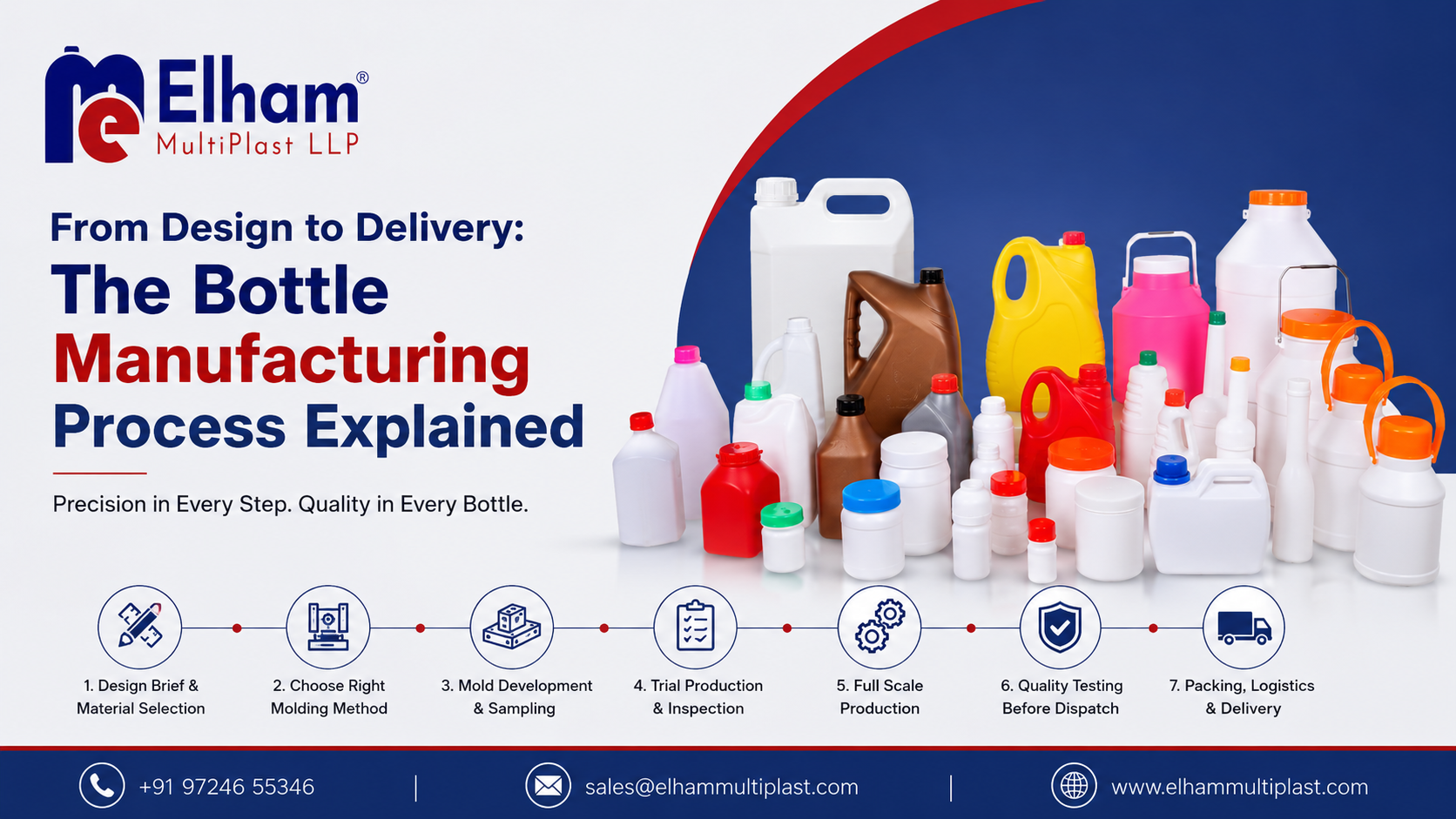
From Design to Delivery: The Bottle Manufacturing Process Explained
September 30, 2026
Top 5 Factors to Consider When Choosing a Plastic Bottle Manufacturer in India
September 30, 2026
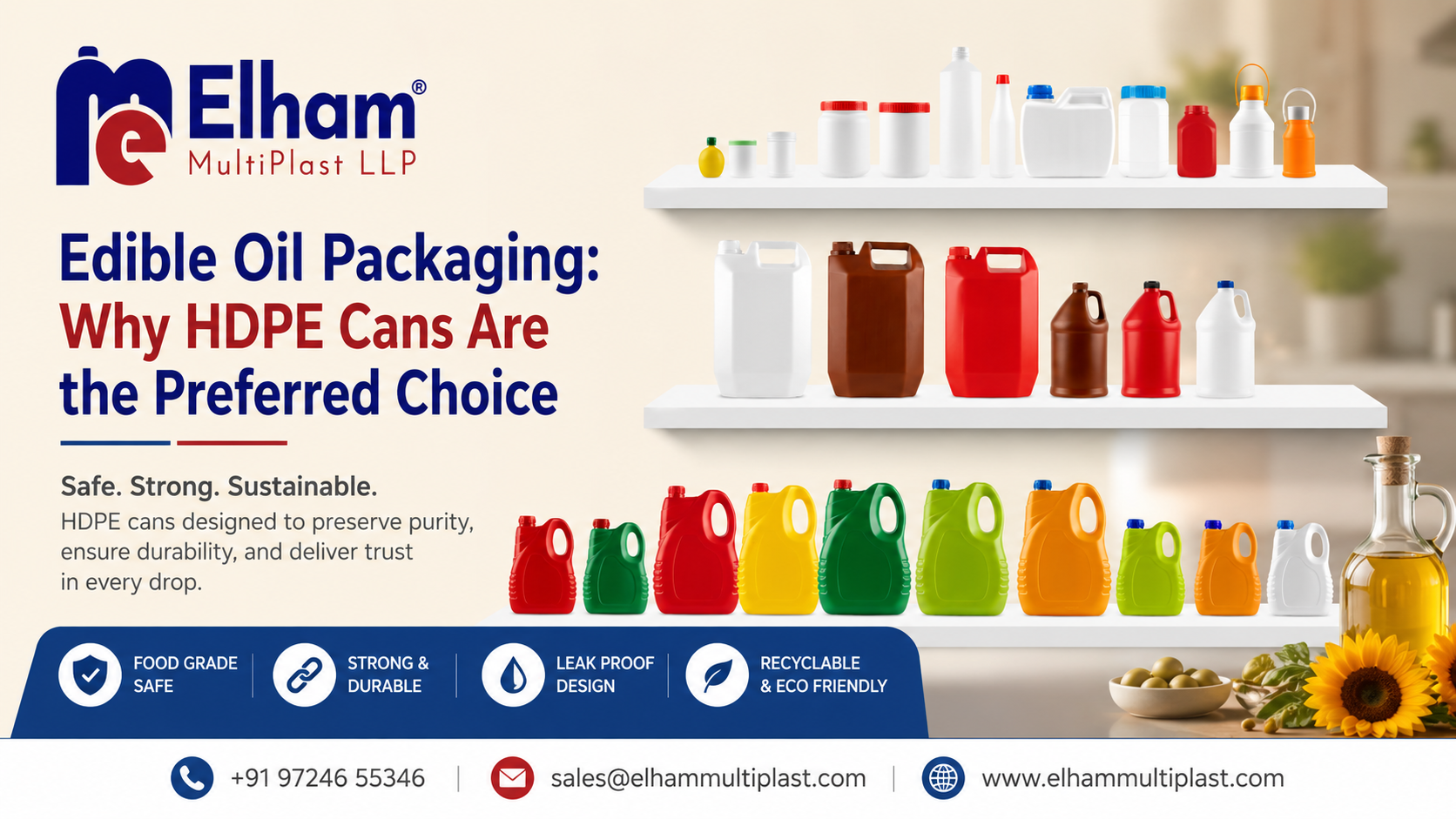
Edible Oil Packaging: Why HDPE Cans Are the Preferred Choice
September 28, 2026