Why Gujarat Is Becoming a Hub for Plastic Packaging Manufacturing
October 24, 2026
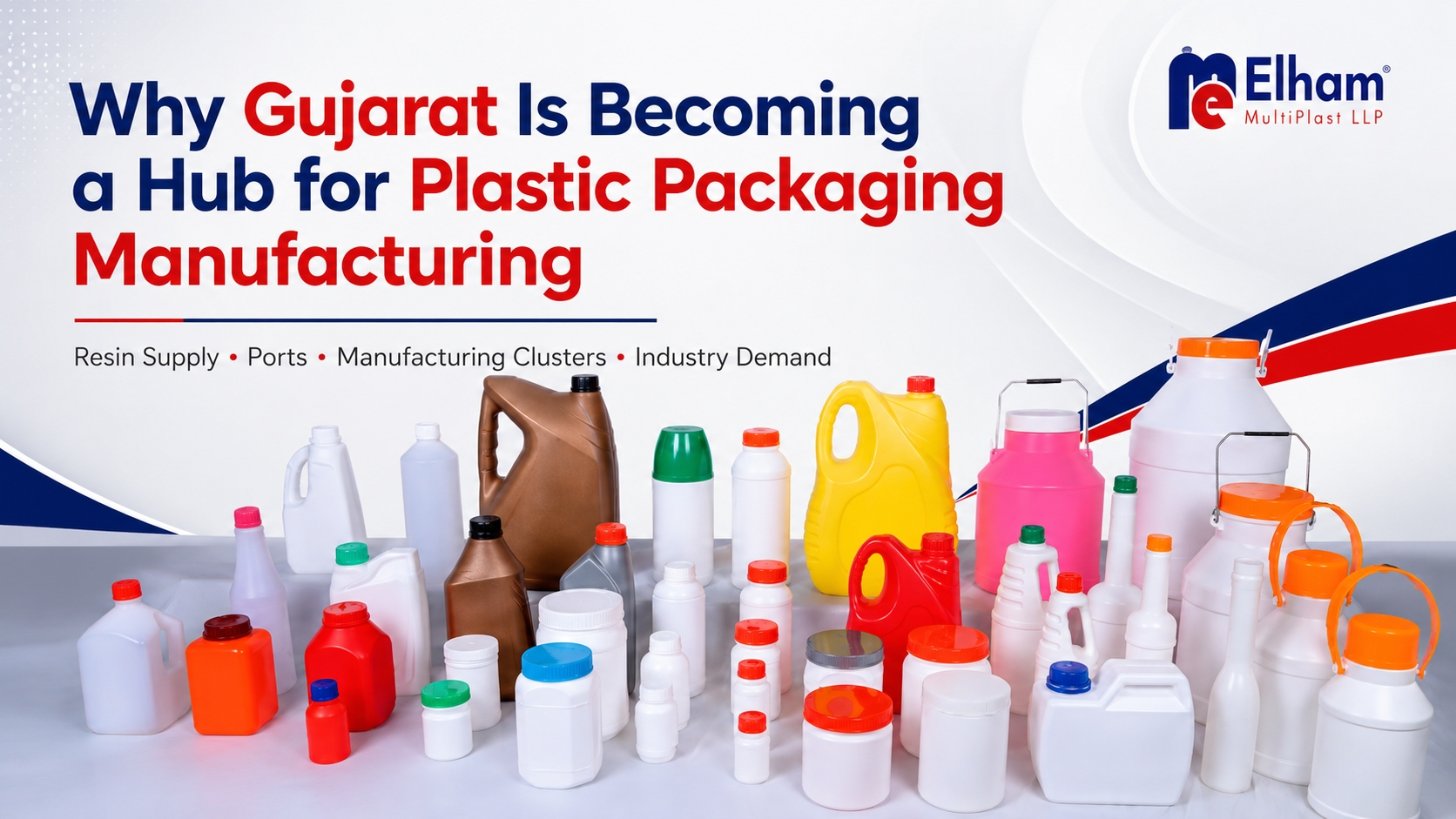
Ask any packaging buyer in India where their last bottle order came from, and there is a good chance the answer is a small industrial town in Gujarat. This is not an accident, and it is not only about low prices. It comes from a chain of advantages that stack on top of each other: where the plastic is made, how it is moved, who knows how to mould it, and which industries need it next door.
This guide explains that chain in plain terms. It is written for Gujarat businesses, national brands, exporters and procurement teams who want to understand what they are really buying into when they source plastic packaging in Gujarat, including the limits.
Quick Answer: Why Is Gujarat a Plastic Packaging Hub?
Gujarat is a plastic packaging hub because it combines nearby polymer production, major ports, a dense network of moulding MSMEs and strong local demand from detergent, agrochemical, edible oil, lubricant and pharma industries. Together these cut raw material travel, shorten tooling cycles and lower landed cost for packaging buyers.
The five reasons in short:
Polymer and resin production sits close to converters
Ports and highways make domestic and export dispatch easier
A deep cluster of moulders, toolmakers and service vendors
Local industries that buy rigid packaging in volume
Industrial land, infrastructure and a supportive policy environment
Every bottle starts as resin. HDPE, PP and PET all come from the petrochemical chain, and Gujarat is where a large part of that chain lives. The Jamnagar and Dahej belt hosts some of the biggest petrochemical complexes in the country, and for years government and industry bodies have credited the state with a majority share of India’s major petrochemical and polymer output. Exact percentages vary by source and year, so treat any single number with care, but the direction has been consistent.
Why does this matter to a bottle buyer? Resin is the largest single cost in a bottle. A converter that sits a few hundred kilometres from the producer saves on freight, holds less buffer stock and can react faster when a grade is needed. Over thousands of orders, that shows up in price stability and delivery reliability.
Polyethylene is also the polymer family doing most of the work in this category. A recent market analysis put polyethylene at roughly a third of India’s plastic industry by polymer type in 2025, anchored by film and blow moulded container demand. That is the same family that gives you HDPE detergent bottles, lubricant containers and agrochemical packs.
Making packaging cheaply is only useful if it can leave the state quickly. Gujarat’s coastline carries a large share of India’s port cargo. Mundra, Kandla, Pipavav, Hazira and Dahej all sit within practical reach of the state’s industrial belts, and rail and road links to them have been built out over many years.
For an exporter or a pan India brand, this translates into three practical benefits:
Shorter inland haul to the port, which reduces damage risk and cost on Full Container Load shipments
More shipping options, so a delay at one port does not stall a dispatch
Faster access to the north and west, since the main national highway corridor runs through both Himatnagar and Surat
Our own units sit on this logic. Himatnagar connects smoothly towards Ahmedabad, Rajasthan and the northern markets, while Surat sits close to Hazira and the Mumbai corridor. You can read how we handle dispatch on our transport facility page.
One good factory does not make a hub. A hub exists when everything around the factory is also available: mould makers, maintenance engineers, colour masterbatch suppliers, cap and closure makers, label printers, corrugated box suppliers and trained operators.
Gujarat has built this ecosystem over decades, and a large share of its plastic units are small and medium enterprises. That matters for buyers because:
New moulds are developed faster, since toolmakers and processors are in the same region
Breakdowns cost less time, because spare parts and technicians are nearby
Skilled labour is easier to find, which supports consistent quality on blow moulding and injection moulding lines
This is why a plastic bottle manufacturer in Sabarkantha can run efficiently even though Sabarkantha is not a coastal district. The ecosystem travels with the cluster, not with the port.
Packaging follows products. Gujarat is home to large detergent and home care brands, a strong agrochemical sector, an edible oil industry centred around Saurashtra, a growing lubricant market, and a heavy pharma and veterinary base around Ahmedabad and Vadodara.
That local demand shapes what converters get good at:
| Industry | Typical packaging need | Resin usually used |
| Liquid detergents and fabric care | Squeeze and pour bottles, 200 ml to 5 litre | HDPE |
| Agrochemicals and pesticides | Chemical resistant bottles with secure closures | HDPE |
| Edible oil | Cans and bottles with clarity or strength | HDPE or PET |
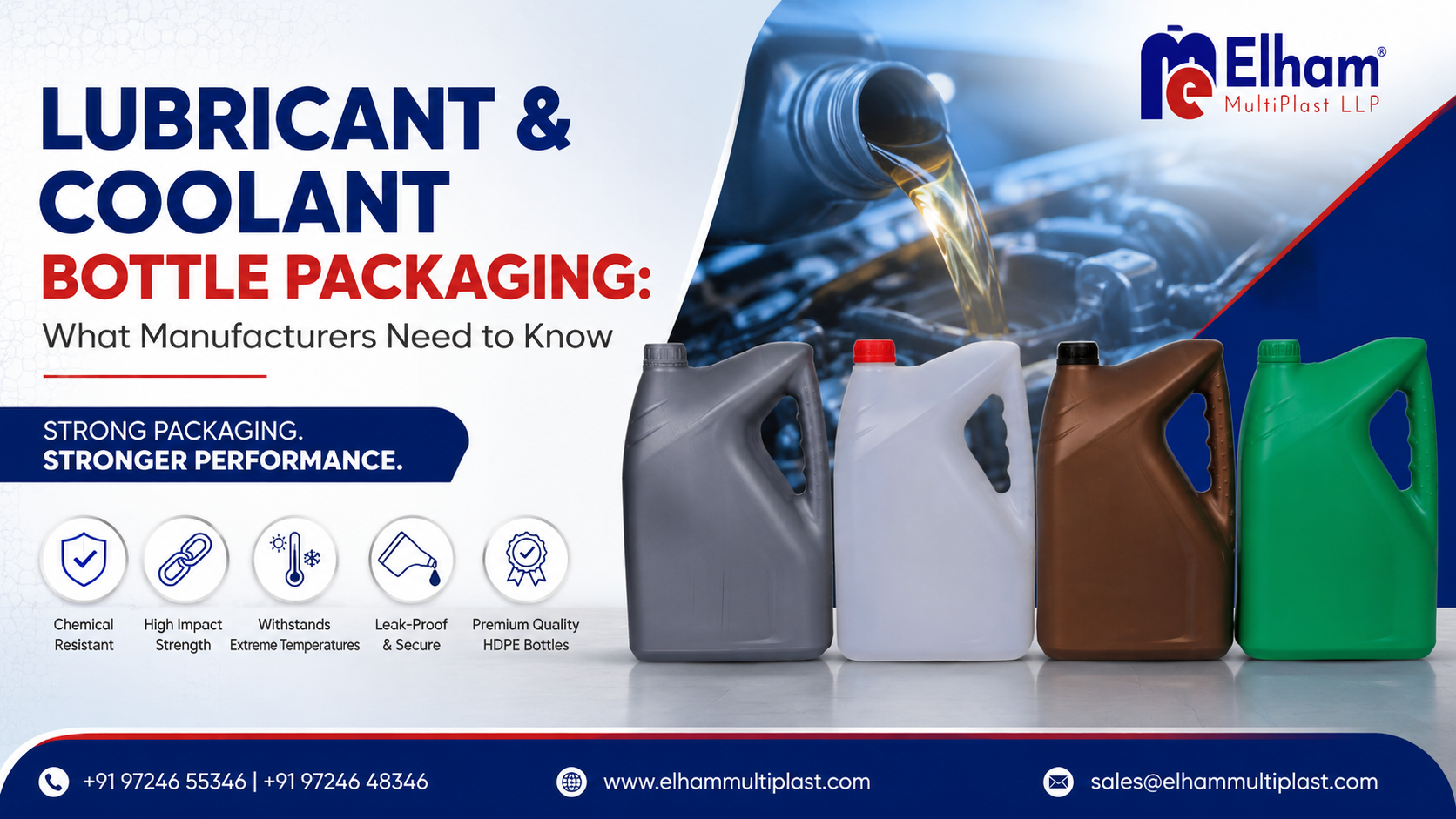
| Lubricants and coolants | Oil resistant bottles and cans, 1 litre and above | HDPE |
| Veterinary and pharma liquids | Clean, consistent bottles | HDPE, PET or PP |
When your neighbours are demanding customers, your quality systems tighten. Converters in the region learn quickly what a leak or a weak closure cost, because their customers are a short drive away. You can see how this plays out across our liquid detergent bottles, agro chemical and pesticide bottles, lubricant bottles and edible oil cans ranges.
Industrial estates, reliable power and a state government that has repeatedly prioritised manufacturing have all helped. Gujarat has also worked on dedicated plastic parks and sector focused policy, and national incentives have been directed at polymer capacity along the Jamnagar to Dahej corridor.
For a packaging manufacturer, the practical effect is simpler: land for expansion is available, approvals are well understood, and new lines can be added without relocating. That is one reason a converter can scale from one unit to two, as we did with our Himatnagar and Surat facilities.
Gujarat is not one uniform market. Each region has its own strengths.
North and central Gujarat (Ahmedabad, Sabarkantha, Himatnagar): Strong Road access to Rajasthan, Delhi NCR and the northern states, with a deep supplier base for moulds and closures.
Saurashtra (Rajkot, Jamnagar): Close to resin production and the edible oil industry, with a strong engineering tradition.
If your customers are in the north, a Sabarkantha unit can be the practical choice. If your cargo leaves through Hazira or Mundra, Surat may suit you better. Working with a supplier that has both avoids that decision altogether.
A hub is not a guarantee of quality. Before sourcing, keep these realities in mind:
Resin prices move. Proximity to production helps, but it does not remove global price swings. Ask how a supplier handles price revisions on long orders.
Monsoon and festival periods affect logistics. Plan buffer stock for July to September and the pre-Diwali rush.
Quality varies widely inside the cluster. A large number of suppliers means large differences between them. Ask for documented torque, leak, drop and burst test records, as covered in our guide to choosing a plastic bottle manufacturer in India.
Compliance is tightening. Extended Producer Responsibility rules and recyclability expectations are growing, and export buyers increasingly ask about them. See how we are adapting in our post on sustainability in plastic packaging.
Three shifts are shaping the next few years:
Lightweighting. Brands want less resin per bottle without losing drop and burst performance.
Recycled content. Interest in post-consumer recycled resin and better recyclability is growing, driven by EPR and export buyers.
Custom design. More brands want their own mould, neck finish and shape rather than a stock bottle, which rewards clusters with fast tooling.
Converters who invest in testing, tooling and compliance now will be better placed than those competing only on price.
Ask which resin grades the supplier uses and why they suit your product.
Request recent torque, leakage, drop and burst test reports.
Confirm MOQ separately for stock designs and for new custom moulds.
Ask for a written lead time that references a comparable past order.
Check dispatch points and experience with FCL and pan India delivery.
Ask about EPR status and recycled resin options.
Order a pilot batch before the first full run.
Elham MultiPlast LLP manufactures HDPE, PET and PP bottles, jars and cans from two units, one in Ilol, Himatnagar and one in Navagam, Kamrej, Surat. We have supplied over 750 clients across 27 countries, with stock and custom designs across detergent, agrochemical, edible oil, veterinary, lubricant and jar categories. Our batch checks are laid out on our quality assurance page, and our commitments are on the guarantees page. For a view of how a bottle goes from design to dispatch, read From Design to Delivery: The Bottle Manufacturing Process Explained.
[Add here: one real detail from your floor, such as machine types, a custom mould you developed, or a customer project. First hand specifics are the strongest EEAT signal.]
Frequently Asked Questions
Why is Gujarat considered a hub for plastic packaging?
Because raw material production, ports, skilled moulding clusters and local demand sit close together. This lowers freight, speeds up tooling and makes dispatch to domestic and export markets easier.
Which city in Gujarat is best for plastic bottle manufacturing?
It depends on your market. Surat and the south Gujarat belt suit port led and western corridor shipments, while Himatnagar and Sabarkantha suit northern India dispatch. Many buyers choose a supplier with units in both regions.
Does Gujarat produce plastic raw materials?
Yes. The Jamnagar and Dahej petrochemical belt produces large volumes of polymers such as polyethylene and polypropylene, which are the base resins for HDPE and PP packaging.
Is HDPE or PET better for bottles?
HDPE is usually chosen for detergents, lubricants and agrochemicals because of chemical resistance. PET is chosen when transparency and gloss matter, such as edible oils and personal care. Your formulation and shelf presentation decide the right choice.
Can a Gujarat manufacturer supply buyers outside the state or overseas?
Yes, if the supplier has proven pan India and export dispatch experience. Ask about FCL handling, packing standards and past deliveries to your region.
Which industries use plastic jars and bottles made in Gujarat?
Detergent and home care, agrochemicals, edible oil, lubricants and coolants, veterinary and pharma liquids, and food products all rely on rigid plastic packaging produced in the state.
Final Thoughts
Gujarat’s lead in plastic packaging comes from a chain of practical advantages: resin nearby, ports within reach, a deep moulding ecosystem, strong local demand and room to grow. Like any hub, it rewards buyers who ask good questions and check the proof. If you are comparing suppliers for your next order, you can request a custom quotation and sample bottles or browse our full product range.
Sources to cite or refresh before publishing: Mordor Intelligence, India Plastic Industry Size and Share (2025 data); Government of Gujarat and FICCI chemical sector material (petrochemical and polymer share, older data); PrintWeek India report on PlastIndia 2018 (MSME base); Gujarat ports cargo share figures.
Why Gujarat Is Becoming a Hub for Plastic Packaging Manufacturing
October 24, 2026
HDPE Bottle Packaging for Chemicals: Key Benefits and Safety Considerations
October 22, 2026
Custom vs Stock Bottles: Which Is Better for Your Business?
October 22, 2026
Plastic Jars for Every Industry: Uses, Sizes and Benefits
October 5, 2026
Lubricant and Coolant Bottle Packaging: What Manufacturers Need to Know
October 5, 2026
Sustainability in Plastic Packaging: How Elham MultiPlast Is Adapting
September 30, 2026