HDPE Bottle Packaging for Chemicals: Key Benefits and Safety Considerations
October 22, 2026
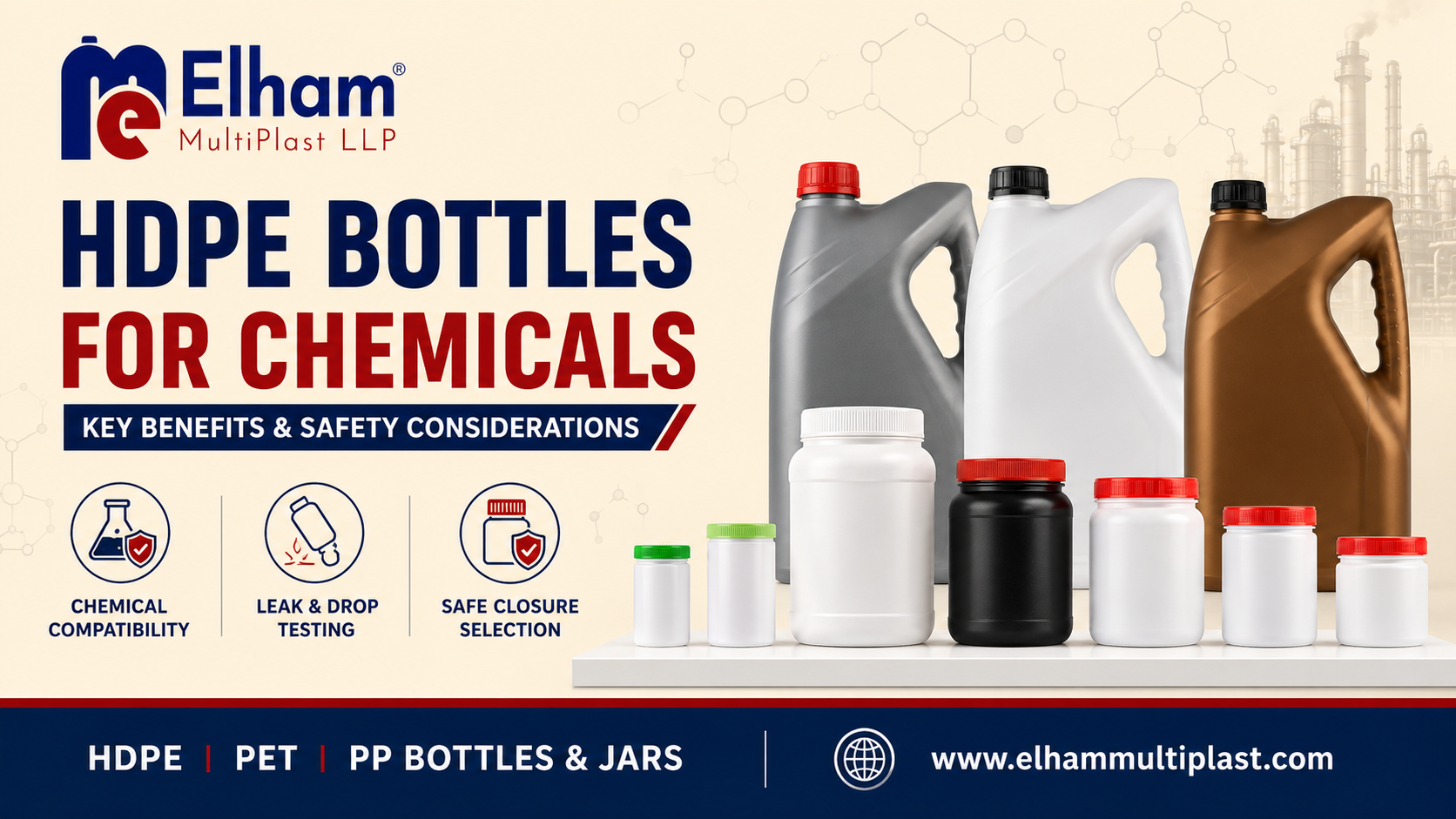
A chemical leaks through its bottle very rarely because the plastic “failed.” It usually leaks because the wrong plastic, the wrong closure or the wrong test was used for that particular product. That is why choosing HDPE bottles for chemicals is a technical decision first and a purchasing decision second.
This guide is for chemical manufacturers, agrochemical companies and industrial buyers who want the benefits of HDPE without the surprises. We cover where HDPE excels, where it needs help, and the safety checks worth making before you place an order.
Quick Answer: Are HDPE Bottles Safe for Chemicals?
HDPE bottles are widely used and generally suitable for many chemicals, including a broad range of diluted acids, alkalis, detergents and aqueous formulations. They are tough, lightweight and resistant to many corrosive products. However, safety depends on your exact formulation. Strong oxidisers, aromatic or chlorinated solvents and some hydrocarbon-based products can swell, permeate or crack standard HDPE, so you should always test your product in the actual bottle and closure.
Why HDPE Works So Well for Chemical Packaging
High density polyethylene is a rigid, semi crystalline plastic with a tightly packed molecular structure. That structure is what gives it:
Resistance to many corrosive and reactive products
Strength without brittleness at normal temperatures
Very low moisture absorption
Good processability on blow moulding lines, which allows consistent wall thickness and neck finish
It is the same reason you see HDPE in detergents, lubricants and agrochemicals more than any other plastic. You can see this across our liquid detergent bottles, lubricant bottles and agro chemical and pesticide bottles.
Key Benefits of HDPE Bottles for Chemicals
HDPE handles many acids, bases and aqueous solutions without corroding, softening or reacting the way metal and some other plastics can. Unlike steel tins, it will not rust, and unlike glass, it does not shatter.
A dropped glass bottle of a corrosive liquid is a safety event. A dropped HDPE bottle usually dents or bounces. That matters in warehouses, farm supply chains and on trucks. One chemical supplier moved from glass to HDPE for exactly these reasons, citing reduced shipping costs and resistance to breakage.
Lower pack weight cuts freight cost and manual handling strain. Lightweight bottles can also reduce the need for dividers and inserts in shipping cartons.
HDPE is a good barrier against water vapour, which helps protect moisture sensitive powders, concentrates and formulations over their shelf life.
Many chemical and agrochemical actives degrade under light. Opaque, pigmented HDPE protects the contents, and UV stabilisers can be added to the resin where needed.
Handles, pouring spouts, graduated or measuring features, grip panels and a wide range of capacities are all achievable. You can browse sizes from 200 ml to 5 litres, or explore custom and stock options.
HDPE is economical per litre packed, and it is a recyclable polymer, which supports EPR compliance when designed and labelled properly. Recycled content in chemical packaging needs its own validation, so do not assume it is a drop-in replacement.
Where HDPE Needs Care: The Compatibility Reality
This is the part generic guides skip. HDPE is resistant, not immune.
| Product type | General HDPE behaviour | What to watch |
| Diluted acids, alkalis, salts | Usually, good | Concentration and temperature |
| Detergents, surfactants, cleaners | Usually, good | Stress cracking over time |
| Alcohols, many aqueous solutions | Usually, good | Verify closure liner |
| Lubricants, coolants, oils | Generally suitable | Grade selection, long term storage |
| Strong oxidisers (e.g. concentrated nitric acid) | Not recommended | Degrades the polymer |
| Aromatic and chlorinated solvents (e.g. xylene, toluene) | Can swell and permeate | Needs a barrier solution |
| Hydrocarbon based agrochemical formulations | Variable | May need barrier bottles |
| Gas releasing products | Pressure builds up | Need vented closures |
This table is a general guide only. It is not a substitute for testing your own formulation.
Stress cracking: the quiet failure
Environmental stress cracking (ESCR) is when a bottle cracks under stress in contact with certain substances, such as surfactants, even though the chemical does not visibly “dissolve” the plastic. The risk is real for detergents, cleaners and some agrochemicals. Resin grade, wall thickness distribution and bottle design all affect it, and resin producers specifically develop grades with better environmental stress cracking performance for household chemical bottles. sabic
Permeation and swelling
Some solvents slowly pass through the HDPE wall or make it swell. The result can be product loss, weight change, panelling (bottle walls pulling in), odour or a weakened bottle. This is common with aromatic and hydrocarbon-based formulations.
Barrier Options When Standard HDPE Is Not Enough
If your product is aggressive to standard HDPE, you have options:
Fluorination: A treatment of the inner surface that improves resistance to nonpolar solvents. A packaging trade article describes how, with in line fluorination, HDPE shows excellent resistance to nonpolar solvents such as xylene and toluene.
Co extruded barrier bottles: Multilayer walls, for instance with an inner nylon layer, designed for hydrocarbon-based chemicals such as herbicides, insecticides or automotive additives.
Alternative resins: In some cases, a different material suits the product better.
Ask your supplier which options they can actually provide, and do not assume a standard bottle will cope.
Safety Considerations Before You Choose a Bottle
Compatibility charts are a starting point. Fill real bottles with your real product, close them with the real cap and liner, and store them at realistic and elevated temperatures. Watch for weight loss, swelling, paneling, cracking, discoloration and odour over weeks. Many buyers also run an accelerated test at higher temperature.
A bottle is only as safe as its seal. Check:
Neck finish matches your filling line
Liner material resists your product (a wrong liner is a common leak source)
Induction seal, tamper evidence and child resistant options where required
Vented caps for products that release gas
Check wall strength and top load
Chemicals are heavy, and stacked pallets add pressure. Make sure the bottle handles its fill weight, stacking height and drop testing. At Elham, we run torque, leakage, drop and burst checks as part of our quality assurance process.
If your product is classified as dangerous goods for transport, the packaging usually has to be UN rated and tested. Compatibility testing standards exist for polyethylene packaging in this context, including ISO 17508, which covers polyethylene, fluorinated polyethylene and coextruded plastic. Confirm classification and packaging group with your regulatory or logistics advisor before locking a design. This guide is not legal or regulatory advice. iso
HDPE can soften in heat and gets tougher to impact in extreme cold. Warehouses, trucks and farm sheds in Indian summers can run hot. Check the temperature range your product will actually see.
Hazard labelling, batch codes and handling instructions must survive moisture, abrasion and chemical contact. Make sure your label and ink are suited to the surface.
Chemical and agrochemical containers should never be reused for water, food or drink. Make this explicit on your labels and in your customer guidance, and follow the rinsing and disposal guidance applicable to your product category.
Store bottles upright, in a cool and ventilated area, away from direct sunlight. Keep incompatible chemicals apart and consider secondary containment for bulk storage.
HDPE vs PET vs PP for Chemicals
| Resin | Strengths | Typical chemical uses |
| HDPE | Chemical resistance, toughness, opacity | Detergents, lubricants, coolants, agrochemicals, industrial liquids |
| PET | Clarity, gloss, good barrier to gases | Products where appearance matters, some consumer chemicals |
| PP | Higher heat resistance, stiffness | Hot fill products, certain closures and jars |
For most industrial and agro chemical liquids, HDPE is the default starting point, and it should be validated against your specific product. For a broader look at choosing a supplier, see our guide to choosing a plastic bottle manufacturer in India.
How to Validate a Chemical Bottle: A 6 Step Process
Share your formulation (active ingredients, solvents, pH, concentration) with your supplier.
Select resin and design based on compatibility, ESCR and strength needs.
Request samples with the intended closure and liner.
Run compatibility and stability tests under realistic and elevated temperature conditions.
Run performance tests such as torque, leakage, drop and stacking.
Pilot batch, then scale up once results are approved.
A Buyer’s Checklist
Is my product aqueous, solvent based, oxidising or gas releasing?
Has this exact formulation been tested in this bottle and closure?
Is the resin grade suited to stress cracking risk?
Is a barrier or fluorinated bottle needed?
Does my transport classification require UN rated packaging?
Are the liner, neck and cap matched to my filling line?
Have I checked the temperature range during storage and transport?
Can my supplier show test records for each batch?
Do I need a dedicated mould or will a stock design work? See our guide on custom vs stock bottles.
Red Flags When Buying Chemical Bottles
| Red flag | Why it matters |
| “HDPE is fine for everything” | No plastic suits every chemical |
| No compatibility testing offered | Failure risk shifts entirely to you |
| Vague answers on resin grade | ESCR and strength depend on it |
| No test records per batch | Quality may be inconsistent |
| No answer on UN or transport questions | You may face compliance issues later |
Frequently Asked Questions
Is HDPE safe for storing chemicals?
For many chemicals, yes. HDPE resists a wide range of acids, alkalis and aqueous products. But it is not suitable for every chemical, so always test your specific formulation in the actual bottle and closure.
What chemicals can be stored in HDPE bottles?
Commonly diluted acids and alkalis, detergents, many lubricants and coolants, alcohols and numerous aqueous solutions. Confirm concentration, temperature and shelf life with testing.
What chemicals should not be stored in standard HDPE?
Strong oxidising agents, and aromatic or chlorinated solvents that can swell or permeate the plastic. Some hydrocarbon-based agrochemical formulations also need barrier or fluorinated bottles.
What is environmental stress cracking?
Cracking that develops when a plastic is under stress and in contact with certain substances, such as surfactants. It is managed through resin choice, wall design and testing.
Are HDPE bottles suitable for pesticides and agrochemicals?
Many are packed in HDPE, but formulations that use aromatic solvents may need barrier bottles. See our agro chemical and pesticide bottles and discuss your formulation with our team.
What is a UN approved bottle?
A bottle tested to UN performance requirements for transporting dangerous goods. Whether you need one depends on how your product is classified.
Can HDPE chemical bottles be recycled?
HDPE is a recyclable polymer, but contaminated chemical containers have specific rinsing and disposal requirements, and recycled content for chemical packaging needs separate validation.
Final Thoughts
HDPE is the workhorse of chemical packaging for good reasons: durability, resistance, light weight and cost. But the best results come from treating the bottle as part of your product’s safety system, not as a commodity. Match the resin to the formulation, test the closure and liner, check transport rules, and validate before you scale.
Elham MultiPlast LLP manufactures HDPE, PET and PP bottles and jars for detergent, lubricant, agrochemical and veterinary applications from two units in Himmat Nagar and Surat, Gujarat. If you are packaging a chemical product, request a quotation and samples and share your formulation details so we can help you choose the right bottle.
HDPE Bottle Packaging for Chemicals: Key Benefits and Safety Considerations
October 22, 2026
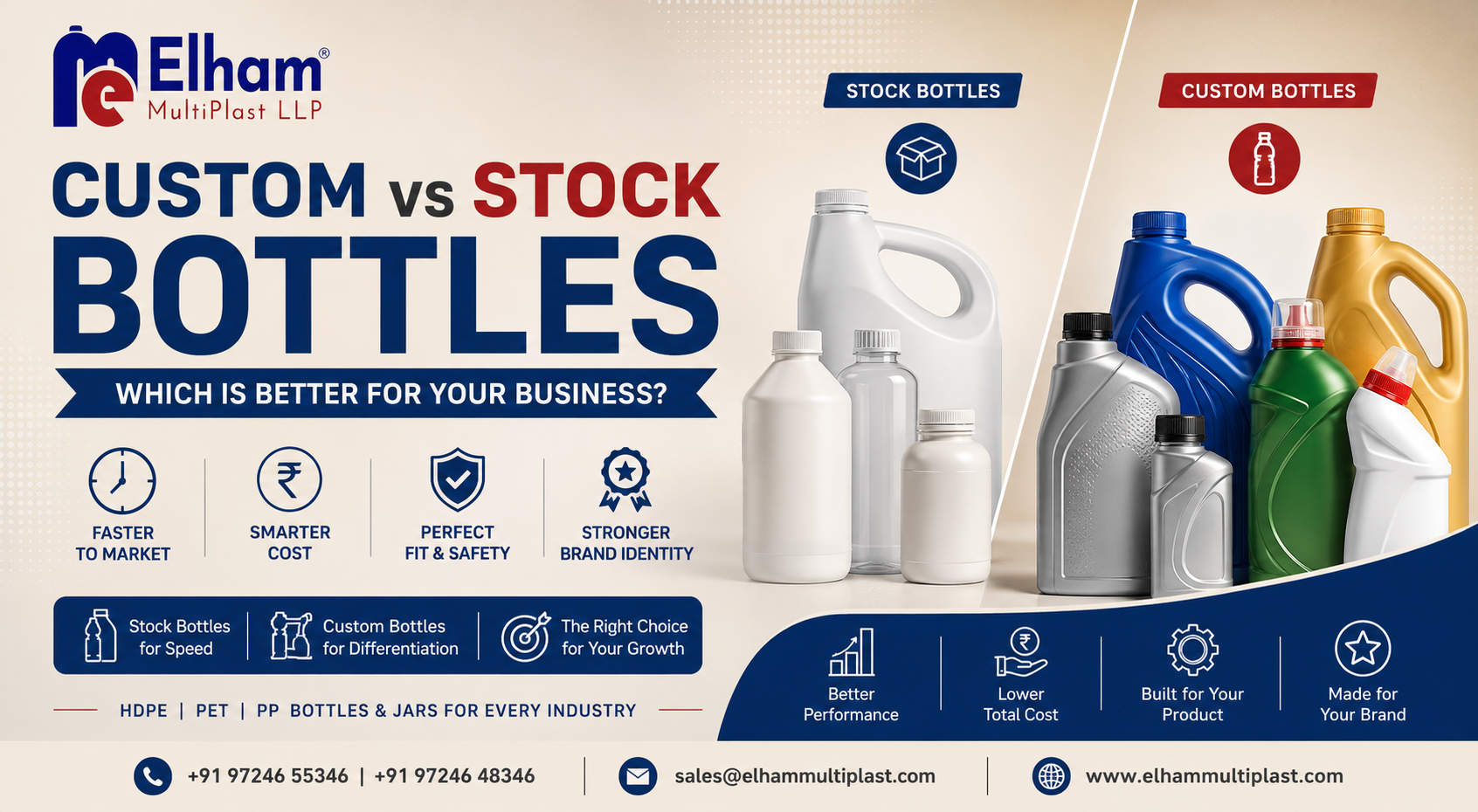
Custom vs Stock Bottles: Which Is Better for Your Business?
October 22, 2026
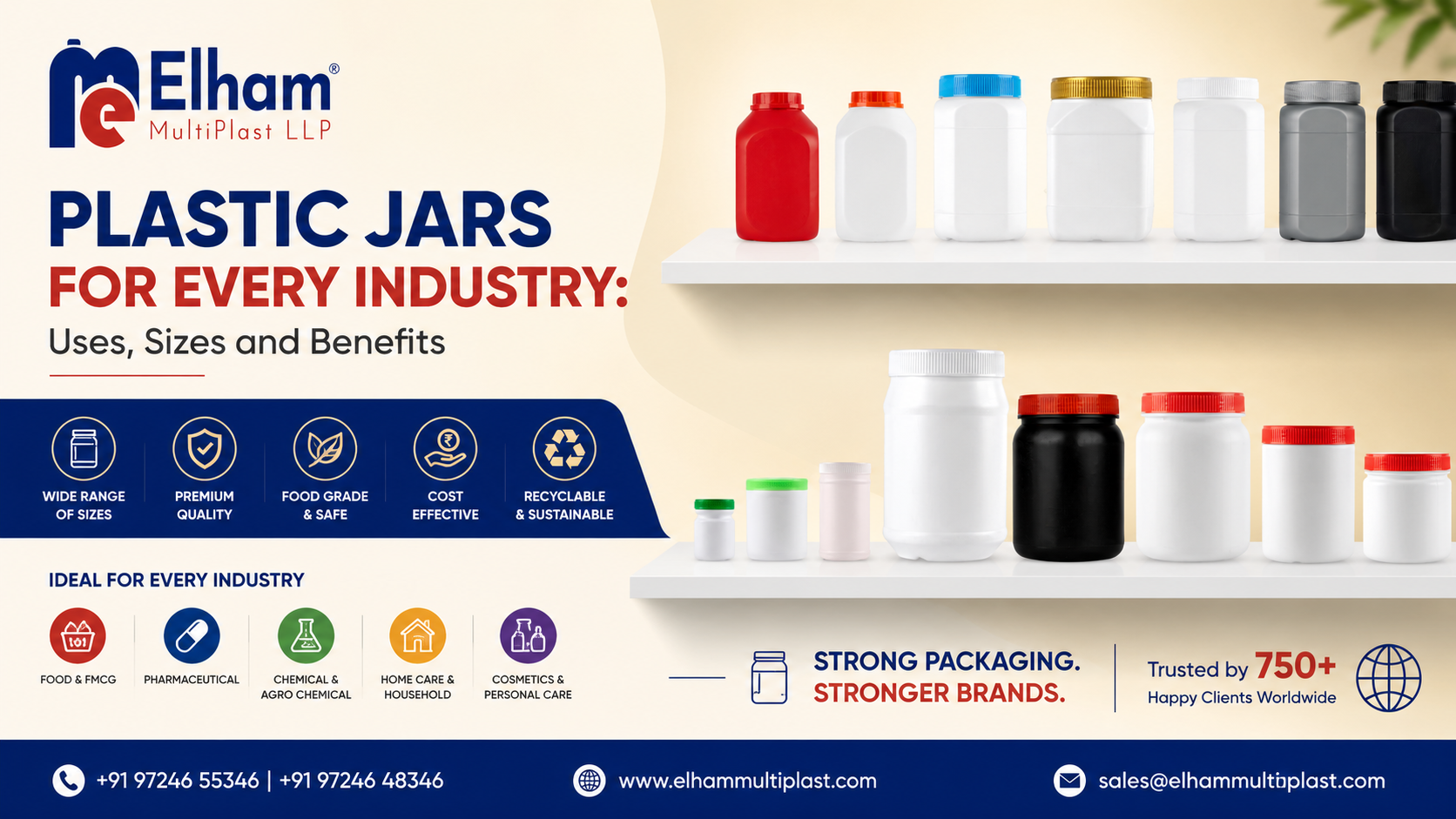
Plastic Jars for Every Industry: Uses, Sizes and Benefits
October 5, 2026
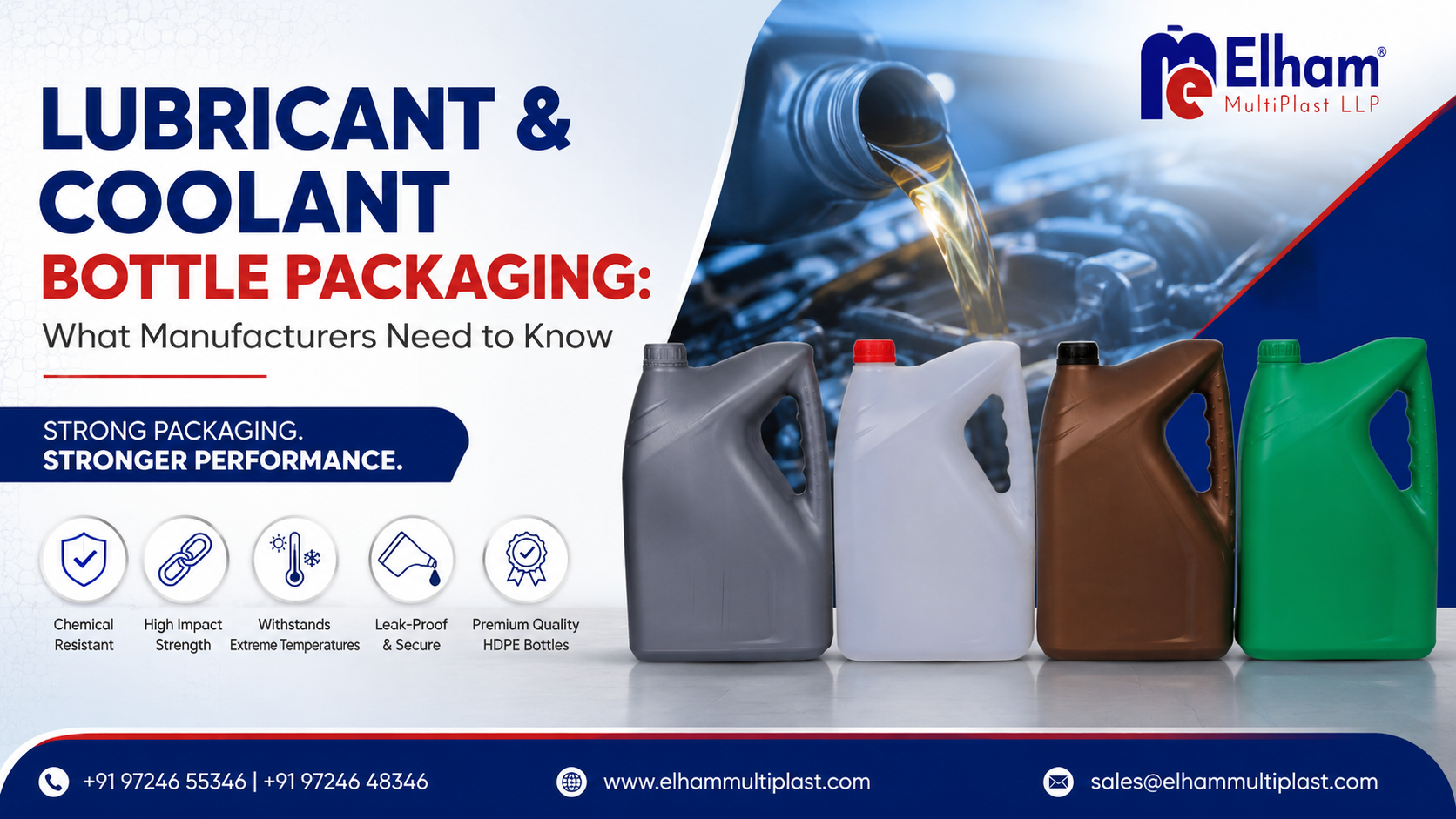
Lubricant and Coolant Bottle Packaging: What Manufacturers Need to Know
October 5, 2026
Sustainability in Plastic Packaging: How Elham MultiPlast Is Adapting
September 30, 2026
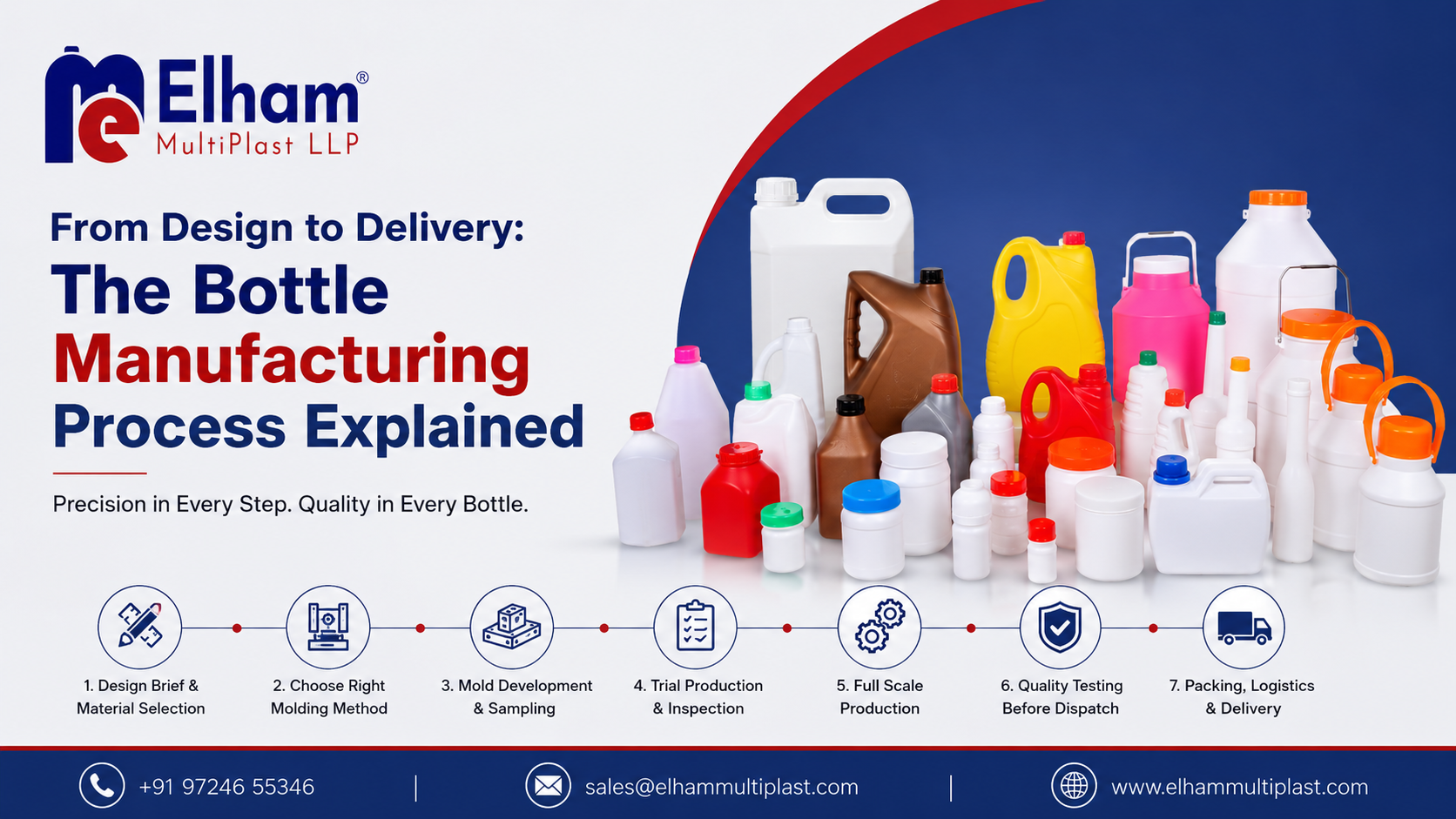
From Design to Delivery: The Bottle Manufacturing Process Explained
September 30, 2026