What Makes a Good Pesticide Bottle? Key Packaging Features to Consider
November 10, 2026
Most complaints about pesticide packaging arrive in the same few forms. A bottle that panelled inside a hot warehouse. A cap that left a ring of product on a dealer’s shelf. A label that peeled off after one week in a farmer’s shed. Very rarely is the real cause “bad plastic.” It is usually a mismatch between the bottle, the closure and the formulation inside it.
This guide is written for agrochemical manufacturers, pesticide brand owners and agricultural businesses who buy pesticide bottles in volume. It explains what actually separates a dependable pesticide container from one that causes trouble later, and what to ask your supplier before you approve a design.
Quick answer: what makes a good pesticide bottle?
A good pesticide bottle is made from virgin HDPE that suits your formulation, uses a barrier or fluorinated wall when the product contains aggressive solvents, and is paired with a sealed, tamper evident closure that fits the neck exactly. It stays strong through stacking, transport and heat, holds a compliant label, and has been tested with your real product before bulk production.
The 10 features to check, at a glance
The sections below take each one in turn.
High density polyethylene is the standard material for liquid agrochemical packaging, and for good reasons. It resists many acids, alkalis and aqueous products, it does not rust like tinplate, and it does not shatter like glass. It is also light, which lowers freight cost on long routes to rural dealers.
For pesticides, the grade of resin matters as much as the material family. Virgin resin gives you a predictable melt behaviour, consistent wall formation and fewer unknowns around contamination. Recycled content in chemical packaging needs its own validation and is not a drop in swap. If a supplier cannot tell you which resin grade goes into your bottle, treat that as a warning sign.
Indian standards also speak to this. BIS has published specifications for HDPE containers used to pack liquid pesticides, including IS 9754 for containers up to 1 litre, with a separate standard for capacities above 1 litre and up to 5 litres. Ask your supplier how their bottles relate to these specifications for your pack size.
HDPE is resistant, not immune. Two bottles that look identical can behave very differently depending on what goes inside.
The problem usually comes from the formulation type. Emulsifiable concentrates often carry aromatic solvents that can slowly pass through standard HDPE, swell the wall or pull the bottle inward. Water based products are far gentler on the plastic, although surfactants can still cause stress cracking over time.
| Formulation type | Typical behaviour in standard HDPE | What to plan for |
| Water based liquids and soluble liquids | Usually, suitable | Check surfactant content and closure liner |
| Suspension concentrates | Usually, suitable | Check for settling, cap seal and wall strength |
| Emulsifiable concentrates with aromatic solvents | Can permeate, swell or panel | Consider fluorinated or co extruded barrier bottles |
| Oil based and hydrocarbon carriers | Variable | Test thoroughly, barrier may be needed |
| Volatile or gas releasing products | Pressure can build | Use a vented closure or vented liner |
Treat this table as a starting point, not a verdict. Your own formulation, at your own storage temperature, is the only reliable test. For a deeper look at the general chemistry, see our guide on HDPE bottle packaging for chemicals.
When a formulation is hard on polyethylene, two proven routes exist.
Fluorinated bottles. The inner surface is treated with fluorine gas, which forms a barrier against solvent migration through the wall. This helps prevent panelling and product loss, and it keeps solvent away from the outer surface where it can attack label adhesive. Fluorinated bottles work best when paired with a cap that has an induction seal or insert, because product can otherwise migrate along the cap.
Co extruded barrier bottles. These have several layers of HDPE with an inner barrier layer such as polyamide or EVOH. The multilayer structure slows permeation and protects against oxidation and moisture.
Which one is right depends on the solvent system, shelf-life target and cost per pack. Be wary of any supplier who says standard HDPE suits every formulation. The honest answer starts with “what is in your product?”
A pesticide bottle is only as secure as its seal. Many field leaks come from the closure, not the bottle. The details worth checking are:
Ask your supplier to run the real cap, real liner and real product together. Testing the bottle alone proves very little.
Pesticide bottles live a rough life. They are packed into cartons, stacked on pallets, loaded onto trucks, unloaded by hand and stored in godowns through a monsoon and a summer. A good bottle copes with all of it.
What matters here is not just average wall thickness but how evenly the plastic is distributed. Thin corners, shoulders or base edges are where bottles crack under load or fail in a drop. Check these performance points:
At Elham, torque, leakage, drop and burst checks are part of our quality assurance process, and we are happy to share what is tested on your specific design.
A bottle is also a tool in the farmer’s hands, so its design should make the right dose easy and the wrong move hard.
If your product needs a unique shape, a dedicated mould is possible. Our guide to custom vs stock bottles explains when each route makes sense.
Many active ingredients lose strength when exposed to light. Opaque, pigmented HDPE protects the contents, and UV stabilisers can be added to the resin for bottles that will sit outdoors or in open sheds.
Heat deserves equal attention. Warehouses, trucks and farm stores in Indian summers can run very hot, and HDPE softens as temperature rises. A bottle that performs well at room temperature may panel or lose cap torque after weeks in a hot godown. When you test, include an elevated temperature stage that reflects real conditions on your supply route.
In agrochemicals, the label is not decoration. It carries the safety information that protects the person using the product, and it is regulated.
Under India’s Insecticides Rules, bottles must carry a label with a minimum number of panels, and labelling requirements were further updated through the Insecticides (First Amendment) Rules, 2025. Packaging types are also expected to be ones approved under the Insecticides Rules, so confirm current requirements with your regulatory team before finalising a design. This guide is not legal advice.
From a packaging point of view, plan for:
Bottles that panel or sweat solvent will lift labels, no matter how good the adhesive is. This is another reason the barrier question in section 3 matters.
This is the feature most buyers forget, and it is where a thoughtful design earns trust. Empty pesticide containers must be rinsed and disposed of properly, and Indian labelling rules require a warning to destroy the container after use. They should never be reused for water, food or drink.
Small design choices make safe disposal easier:
Farmers will follow instructions that are easy to follow. A bottle that drains well makes that much more likely.
One good sample means little. What you need is the same bottle every time, across hundreds of thousands of units. Ask your supplier:
A supplier who answers these clearly, and shows you the records, is protecting your brand as well as their own.
How to brief a pesticide bottle supplier
A good brief saves weeks of back and forth. Send these details when you request samples:
Some pesticide products are classified as dangerous goods in transport, which can mean UN rated packaging is required. Confirm this with your regulatory or logistics advisor before locking a design.
Common mistakes buyers make
How Elham MultiPlast approaches pesticide bottles
Elham MultiPlast LLP manufactures HDPE bottles for agrochemicals, pesticides, fertilisers and liquid crop protection products from two units in Himmat Nagar and Surat, Gujarat. Our bottles use virgin grade HDPE, are available from 100 ml to 5 litres, and can be supplied with tamper proof, leak resistant closures, UV stable and weather resistant construction, and label friendly surfaces. We can also develop custom shapes to match your brand.
We work with agrochemical manufacturers, pesticide and insecticide brands, liquid fertiliser suppliers, herbicide and fungicide producers and contract packers. If your formulation needs something beyond a standard bottle, share the details and we will discuss the right resin, barrier and closure options with you. You can also read about our transport facility and guarantees.
Frequently asked questions
What are pesticide bottles made of?
Most pesticide bottles are made of high-density polyethylene (HDPE) because it resists many chemicals, is strong, and is light to ship. Some products use fluorinated or multilayer co extruded HDPE for extra barrier protection, and PET bottles are used for certain liquid pesticides under Indian standards.
Are HDPE bottles safe for pesticides?
For many formulations, yes. HDPE handles a wide range of water based and suspension products well. Formulations with aromatic solvents or hydrocarbons may need a barrier bottle, so always test your own product in the actual bottle and cap.
What is the difference between a fluorinated and a co extruded pesticide bottle?
A fluorinated bottle has its inner surface treated with fluorine to block solvent migration. A co extruded bottle has multiple layers with an inner barrier material such as polyamide or EVOH. Both reduce permeation, and the right choice depends on your solvent system, shelf life and budget.
Why do some pesticide bottles collapse or bulge?
Collapse, also called paneling, often happens when solvent passes through the wall and the bottle pulls inward. Bulging usually comes from volatile or gas releasing products building pressure. Barrier bottles and vented closures address these problems.
What closure is best for a pesticide bottle?
A continuous thread cap with an induction seal and a tamper evident ring suits most products. Volatile formulations may need a vented cap or liner, and some products benefit from child resistant closures. The liner must be compatible with your formulation.
What sizes do pesticide bottles come in?
Common sizes run from 50 ml and 100 ml up to 1 litre, 2 litre and 5 litre packs. Elham MultiPlast supplies agrochemical bottles from 100 ml to 5 litres, with custom shapes available.
Can empty pesticide bottles be reused?
No. Empty pesticide containers should never be reused for food, water or drink. They should be rinsed and disposed of as directed on the product label and local rules.
How do I choose a pesticide bottle manufacturer?
Look for clarity on resin grade, willingness to test your formulation, closure expertise, batch test records and the ability to scale. Our guide on choosing a plastic bottle manufacturer in India covers this in more detail.
Final thoughts
A good pesticide bottle protects three things at once: the formulation inside, the person handling it, and the reputation of your brand. Getting there means matching resin, barrier and closure to your product, designing for real field conditions, and proving the result with tests before you scale.
If you are planning a new pack or reviewing an existing one, request a quotation and samples and share your formulation details. Our team will help you shortlist the right bottle. You can also explore our full agro chemical and pesticide bottles range or read about how we are adapting in our piece on sustainability in plastic packaging.
What Makes a Good Pesticide Bottle? Key Packaging Features to Consider
November 10, 2026

Why Gujarat Is Becoming a Hub for Plastic Packaging Manufacturing
October 24, 2026
HDPE Bottle Packaging for Chemicals: Key Benefits and Safety Considerations
October 22, 2026
Custom vs Stock Bottles: Which Is Better for Your Business?
October 22, 2026
Plastic Jars for Every Industry: Uses, Sizes and Benefits
October 5, 2026
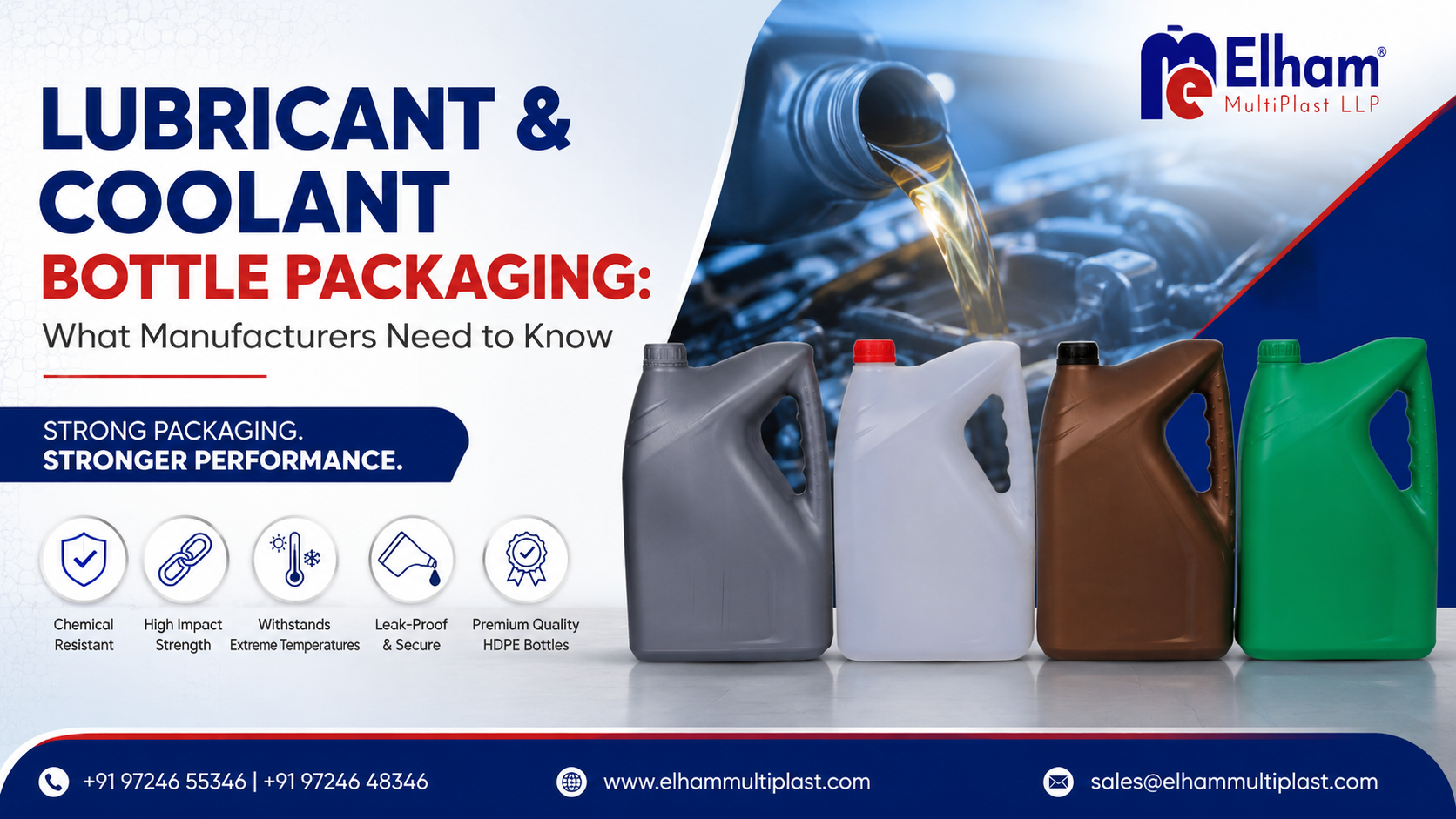
Lubricant and Coolant Bottle Packaging: What Manufacturers Need to Know
October 5, 2026