Sustainability in Plastic Packaging: How Elham MultiPlast Is Adapting
September 30, 2026
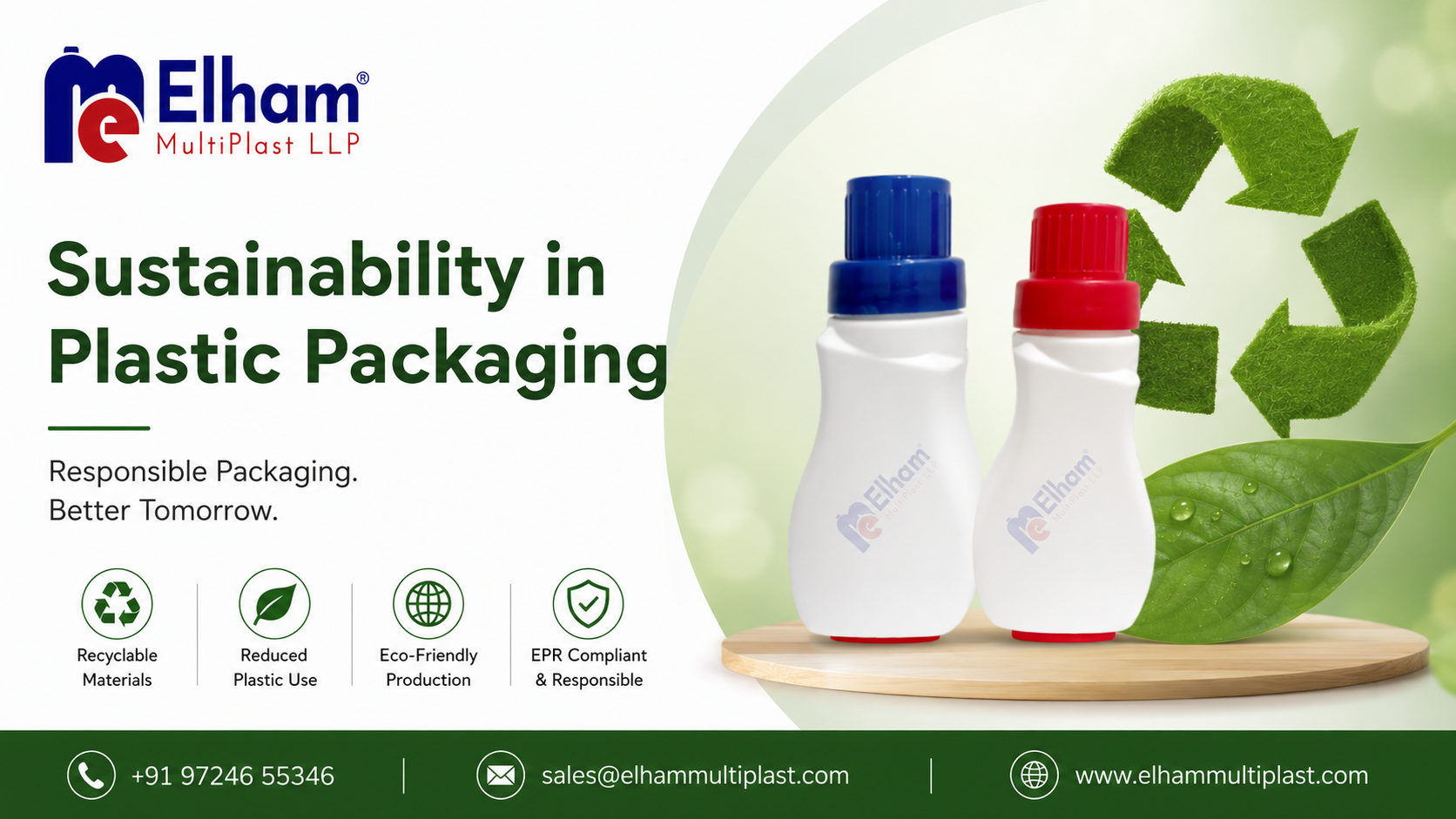
Plastic packaging is under more scrutiny today than at any point in the last two decades. FMCG brands are being asked by retailers and export markets to prove their packaging choices, procurement teams are adding recyclability questions to supplier scorecards, and India’s own regulations now hold manufacturers and brand owners jointly accountable for what happens to a bottle after it leaves the shelf. Understanding sustainable plastic packaging is no longer optional homework. It is becoming a basic qualifying question in every sourcing conversation.
This article looks at what sustainability actually means for rigid plastic packaging, where the real environmental gains come from in manufacturing, and how a producer like Elham MultiPlast is adapting its own processes in response. Where a claim needs a certificate or a documented number behind it, we say so plainly rather than dressing up a general industry practice as a proprietary achievement.
Sustainable plastic packaging is packaging designed and produced to minimize material waste, remain recyclable within existing collection systems, and comply with a country’s extended producer responsibility framework. For rigid bottles and jars, this comes down to four measurable factors:
Material choice, favoring mono material resins like HDPE and PET that are widely collected and recycled
Resin efficiency, using precise wall thickness to cut material use without weakening the bottle
Recycled content, blending post consumer recycled resin where the application allows it
Regulatory compliance, meeting India’s Plastic Waste Management Rules and EPR obligations
Compared to multi layer flexible pouches or laminated packaging, rigid recyclable HDPE bottles and PET containers have a real structural advantage: they are mono material. A pouch made of layered plastic and foil is difficult and expensive to separate for recycling, while a single resin bottle can go directly into existing HDPE or PET recycling streams without pre-processing. HDPE carries recycling code 2 and PET carries code 1, both of which are already accepted by India’s growing network of recyclers and EPR aggregators.
This is not a minor technical detail. It is the reason rigid plastic packaging, when specified correctly, can outperform seemingly lighter or more premium looking alternatives on actual end of life outcomes. An eco friendly packaging manufacturer that sticks to mono material HDPE, PET, and PP, rather than mixing in foil liners or non recyclable additives, is making one of the highest impact sustainability decisions available in rigid packaging, often without needing to say much about it.
India’s Plastic Waste Management Rules, along with the Extended Producer Responsibility framework introduced through the Central Pollution Control Board, place a legal obligation on producers, importers, and brand owners to register on the EPR portal and account for the plastic packaging they place in the market. In practice, this means the brand that sells a product in a plastic bottle carries a compliance obligation, not just the manufacturer who made it.
For procurement teams, this raises a new supplier question: does your packaging manufacturer understand how its output feeds into your own EPR obligations? A supplier who can speak clearly about recyclability codes, category classification under the rules, and how their bottle design supports your reporting is a materially safer long term partner than one who has never been asked the question.
Sustainability claims in packaging are easy to make and hard to substantiate. The practices below are the ones that produce a real, physical reduction in material use or waste, and they are worth asking any sustainable bottle production partner to explain in detail.
Every gram of resin that goes into a bottle beyond what is structurally necessary is waste. Manufacturers running documented torque, leakage, drop, and burst strength testing are able to identify the minimum wall thickness a design can safely use, then hold that thickness consistently across a production run. This is what allows a bottle to be light weighted over time without becoming fragile.
Running production closer to a client’s filling line, rather than shipping half finished components across the country, cuts transport related emissions and reduces the packaging and handling waste generated at each transfer point. This is also the underlying logic behind a dedicated manufacturing setup, where an entire line is committed to a single client’s specifications rather than shared across unrelated runs.
A bottle that fails in the field, whether from a leak, a cracked shoulder, or a cap that will not seal, does not just create a customer complaint. It creates a second unit of plastic that has to be produced to replace it. Rigorous incoming and outgoing quality checks reduce the rejection rate, which is a sustainability outcome even though it rarely gets described as one.
Post consumer recycled resin, often shortened to PCR, is increasingly requested by sustainability-focused brands. It is a genuine option for many rigid packaging categories, but it comes with trade offs that a responsible custom plastic packaging supplier should walk you through rather than gloss over.
Color consistency can vary between PCR batches, which affects brand presentation on clear or light colored bottles.
Food contact applications carry specific regulatory restrictions on recycled content, and not every recycling process is approved for direct contact with edible products.
Cost is not always lower. Certified, traceable PCR resin with consistent quality can carry a premium over virgin material, depending on supply and demand.
For non food contact categories such as detergent, lubricant, and agrochemical packaging, blending recycled content is generally more straightforward, and is a reasonable question to raise directly with your manufacturer during specification.
Confirm the resin type and its recycling code before finalizing a design.
Ask whether the bottle is mono material or includes liners, foils, or multi layer components.
Request the manufacturer’s documented testing process behind any light weighting claim.
Clarify whether your product category can accept recycled content, and at what percentage.
Ask how the supplier’s production footprint affects transport distance to your filling site.
Confirm your own EPR registration status covers the packaging category you are sourcing.
Elham MultiPlast LLP works exclusively with HDPE, PET, and PP, all mono material resins that are already part of India’s established recycling streams, rather than introducing multi layer or laminated formats into its product range. Production runs across two units in Himmatnagar and Surat, Gujarat, which allows orders to be routed to whichever facility sits closer to a client’s dispatch point, reducing unnecessary transit distance for domestic orders.
Every batch is checked against the torque, leakage, drop, and burst strength protocol described on our quality assurance page, which is the same testing discipline that makes safe light weighting possible over time. For brands and exporters evaluating export quality plastic bottles with a genuine sustainability angle, our team is happy to discuss resin selection, recycled content feasibility for your specific product category, and mono material design choices during the quotation stage.
We have kept this section deliberately factual. If your sourcing process requires a specific certification, a documented recycled content percentage, or an EPR registration reference, our team can confirm current status directly so that claim appears here with the evidence behind it rather than as a general statement.
| Factor | Why it matters | Question to ask your supplier |
| Resin type | Mono material resins recycle more easily than layered formats | Is this bottle single resin or multi layer? |
| Wall thickness | Lower material use per unit without sacrificing strength | What testing supports this thickness? |
| Recycled content | Reduces virgin resin demand where the category allows it | Can PCR be blended for my product category? |
| EPR compliance | Legal obligation shared between brand owner and producer | How does this packaging support my EPR reporting? |
Yes. HDPE carries recycling code 2 and is one of the most widely accepted materials in India’s formal and informal recycling networks, making it a practical choice for detergent, lubricant, and agrochemical packaging.
Extended Producer Responsibility requires brand owners, producers, and importers to register with the Central Pollution Control Board and account for the plastic packaging they introduce into the market. It shifts part of the end of life responsibility onto the brand, not only the manufacturer.
It depends on the recycling process and the regulatory approval behind it. Many food contact applications have specific restrictions on recycled content, so this should be confirmed category by category rather than assumed.
Not necessarily. Certified, quality controlled PCR resin can carry a premium depending on market supply, and color consistency may require adjustments to your packaging design.
Ask for specifics rather than general statements: the exact resin type and recycling code, documented testing behind any light weighting claim, and whether recycled content percentages are backed by supplier certification.
Real sustainability progress in rigid plastic packaging comes from decisions that are easy to overlook: choosing mono material resins, testing rigorously enough to reduce both rejects and wall thickness, and being transparent about what recycled content is realistic for a given product category. Elham MultiPlast LLP continues to build its HDPE bottles manufacturer operations around these fundamentals across its Himmatnagar and Surat facilities.
If sustainability credentials are part of your supplier evaluation, our team can walk you through resin options, recycled content feasibility, and testing documentation for your specific product category. You can start that conversation through our contact page or explore our full range of industry solutions to see where your packaging category fits.
Sustainability in Plastic Packaging: How Elham MultiPlast Is Adapting
September 30, 2026
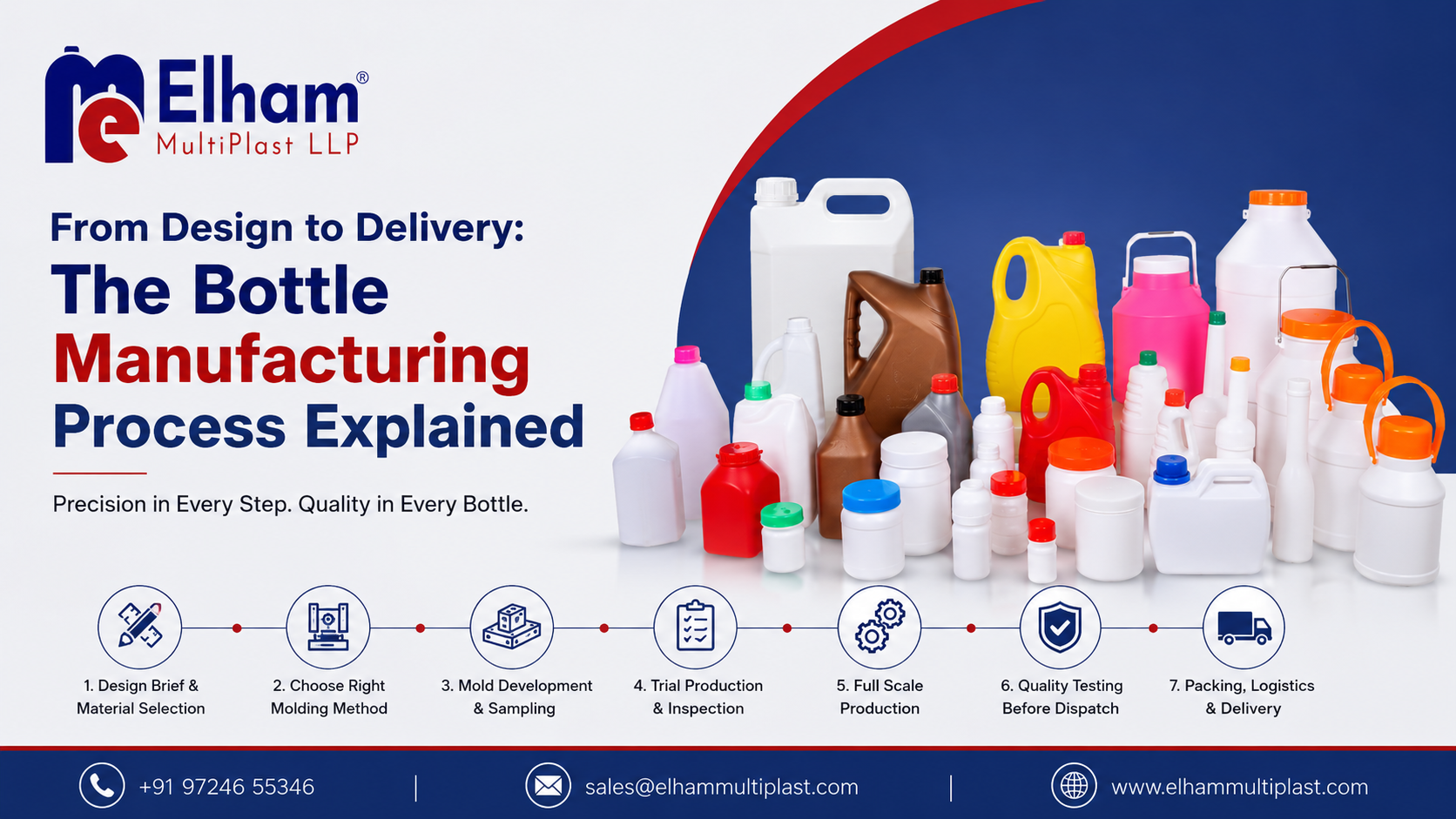
From Design to Delivery: The Bottle Manufacturing Process Explained
September 30, 2026
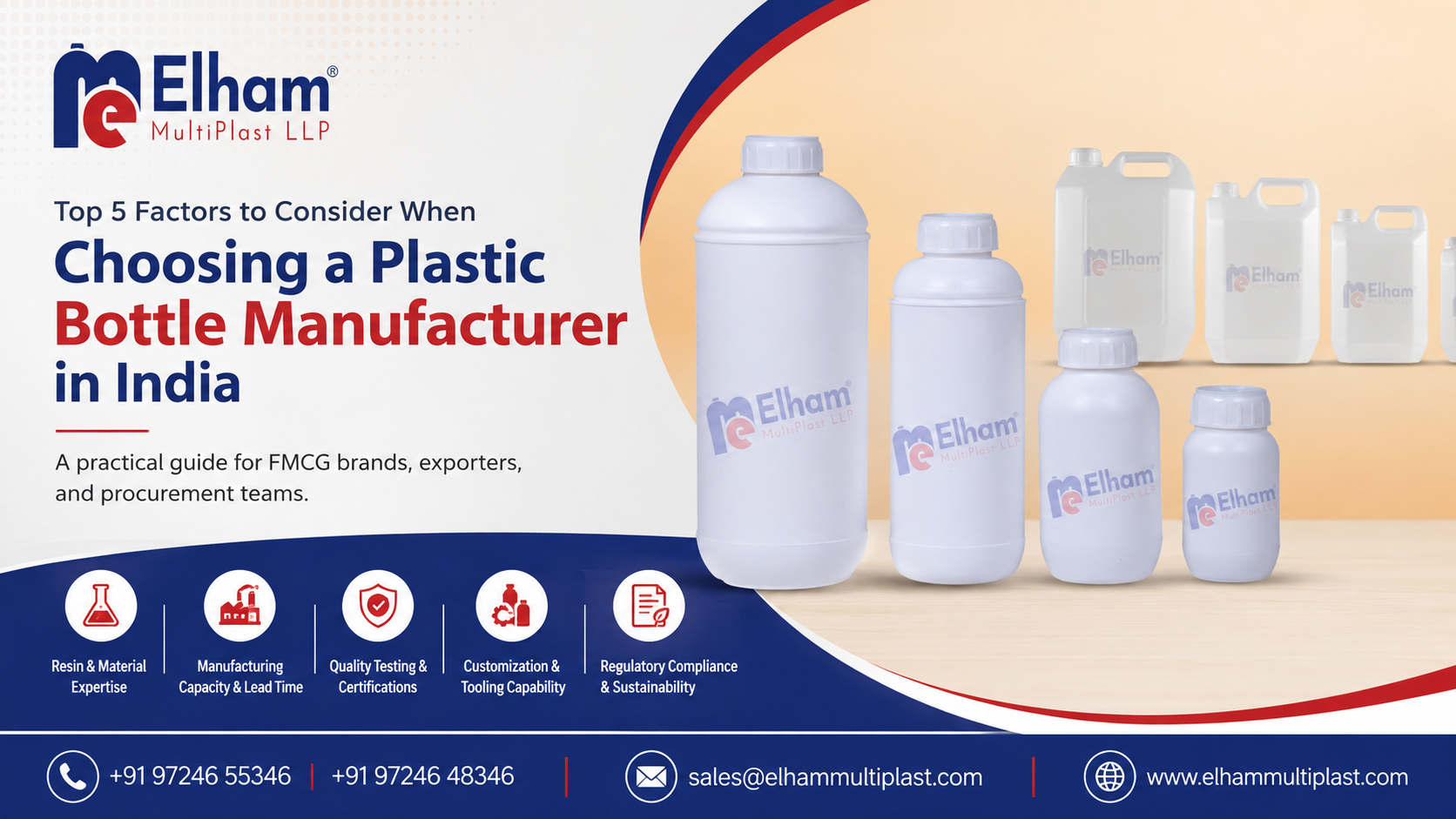
Top 5 Factors to Consider When Choosing a Plastic Bottle Manufacturer in India
September 30, 2026
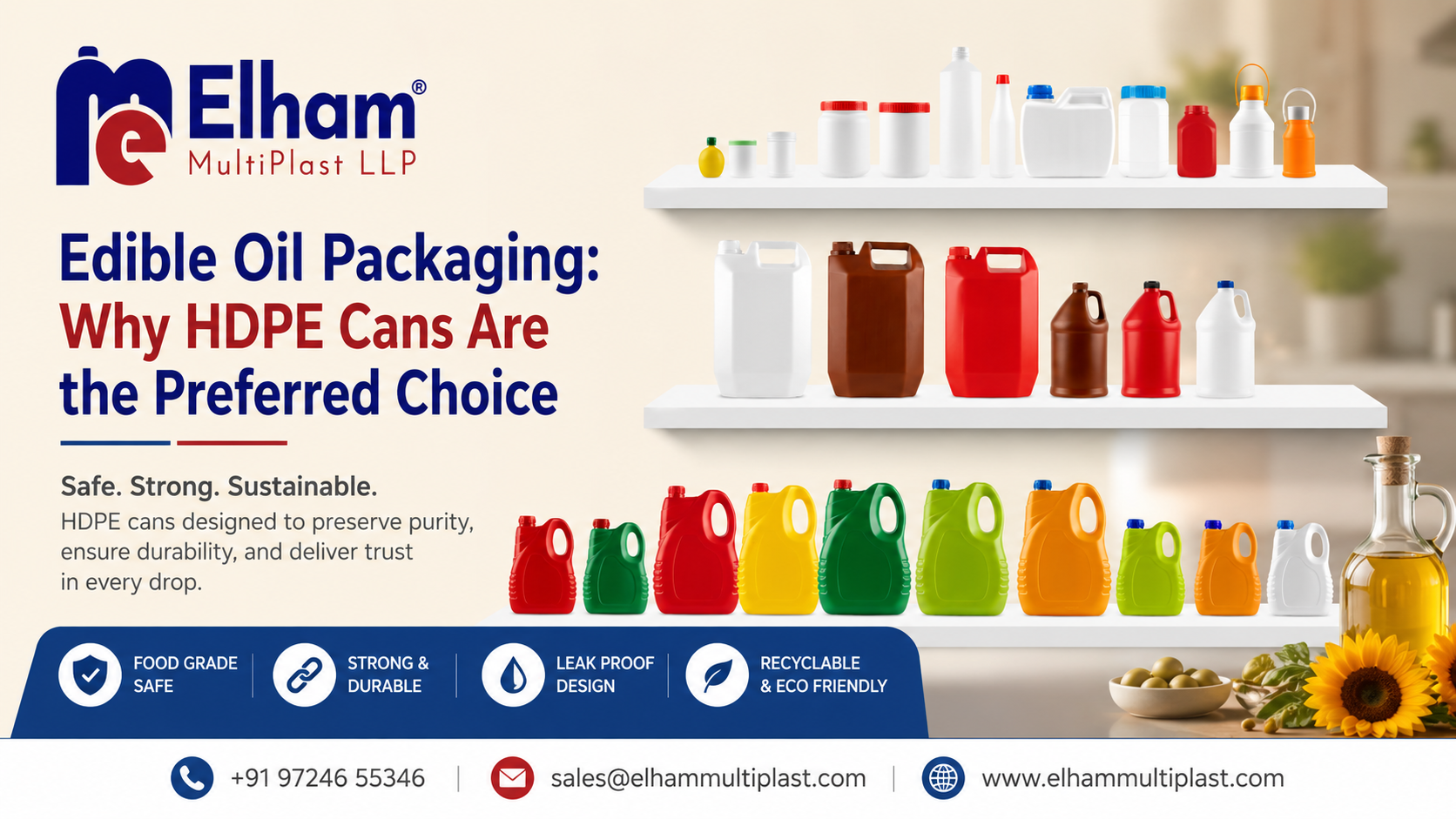
Edible Oil Packaging: Why HDPE Cans Are the Preferred Choice
September 28, 2026
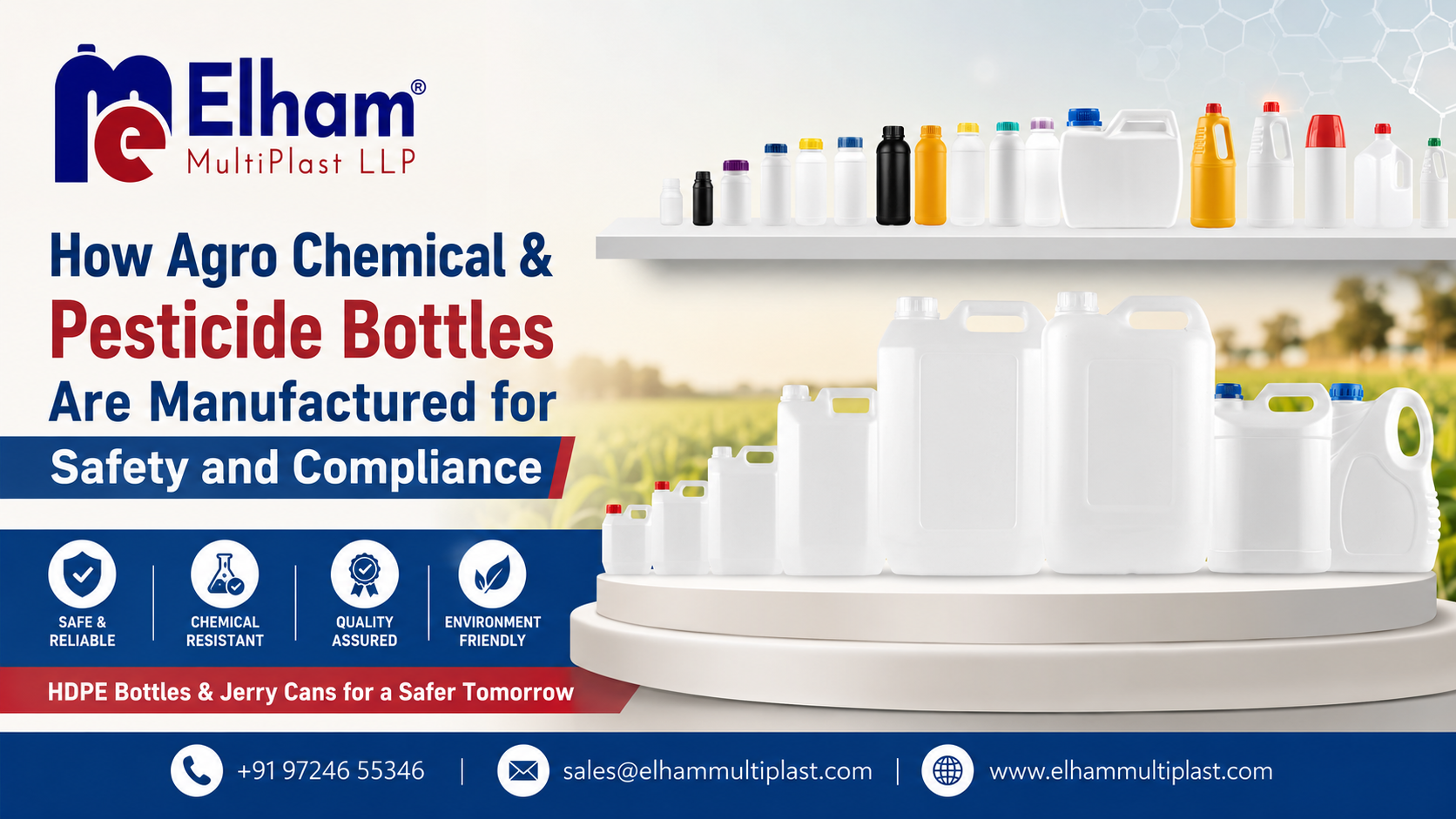
How Agro Chemical & Pesticide Bottles Are Manufactured for Safety and Compliance
September 28, 2026
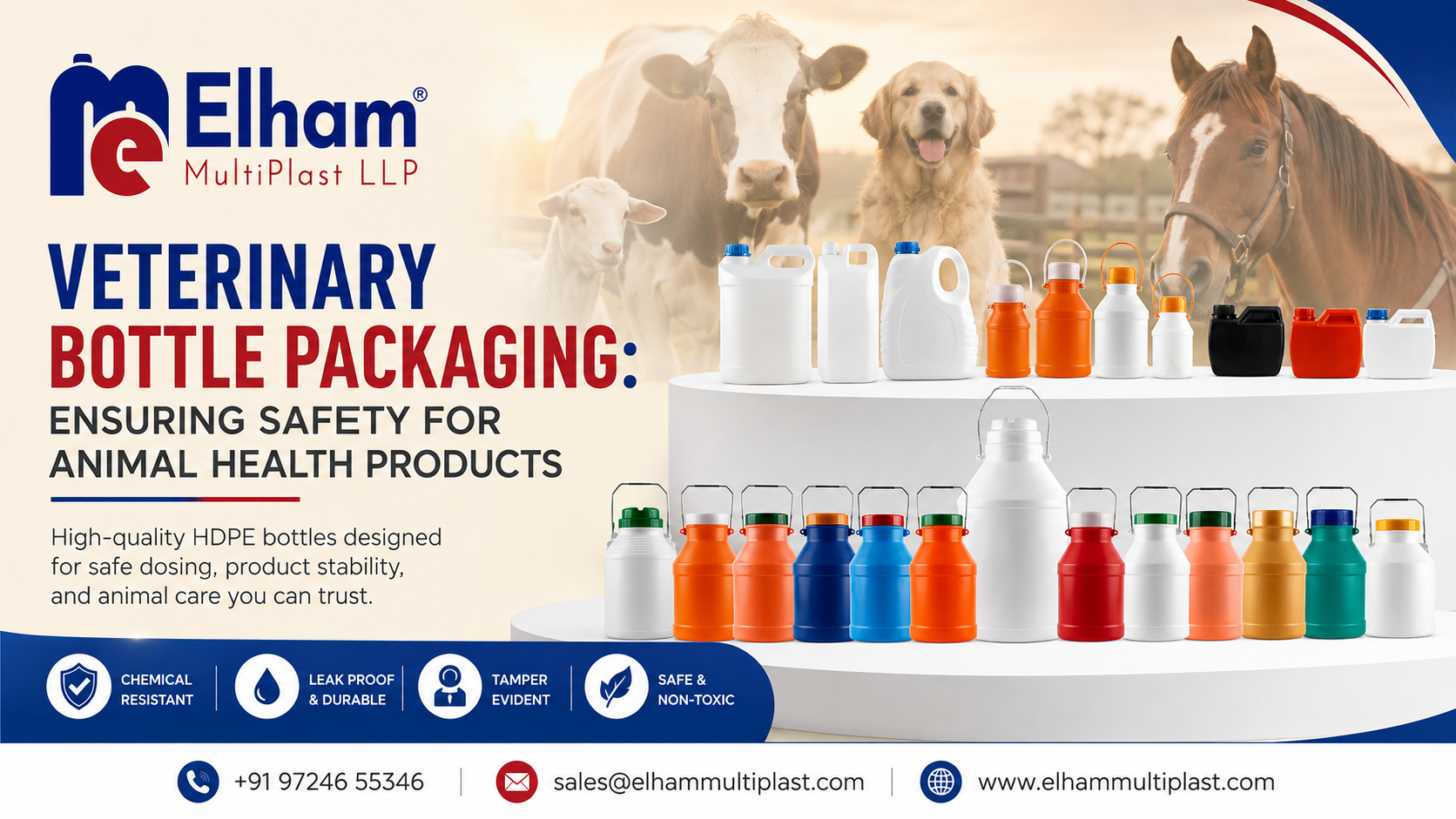
Veterinary Bottle Packaging: Ensuring Safety for Animal Health Products
September 28, 2026