200 ml Fabric Softener Bottles: The Ideal Packaging Solution for Fabric Care Brands
November 17, 2026
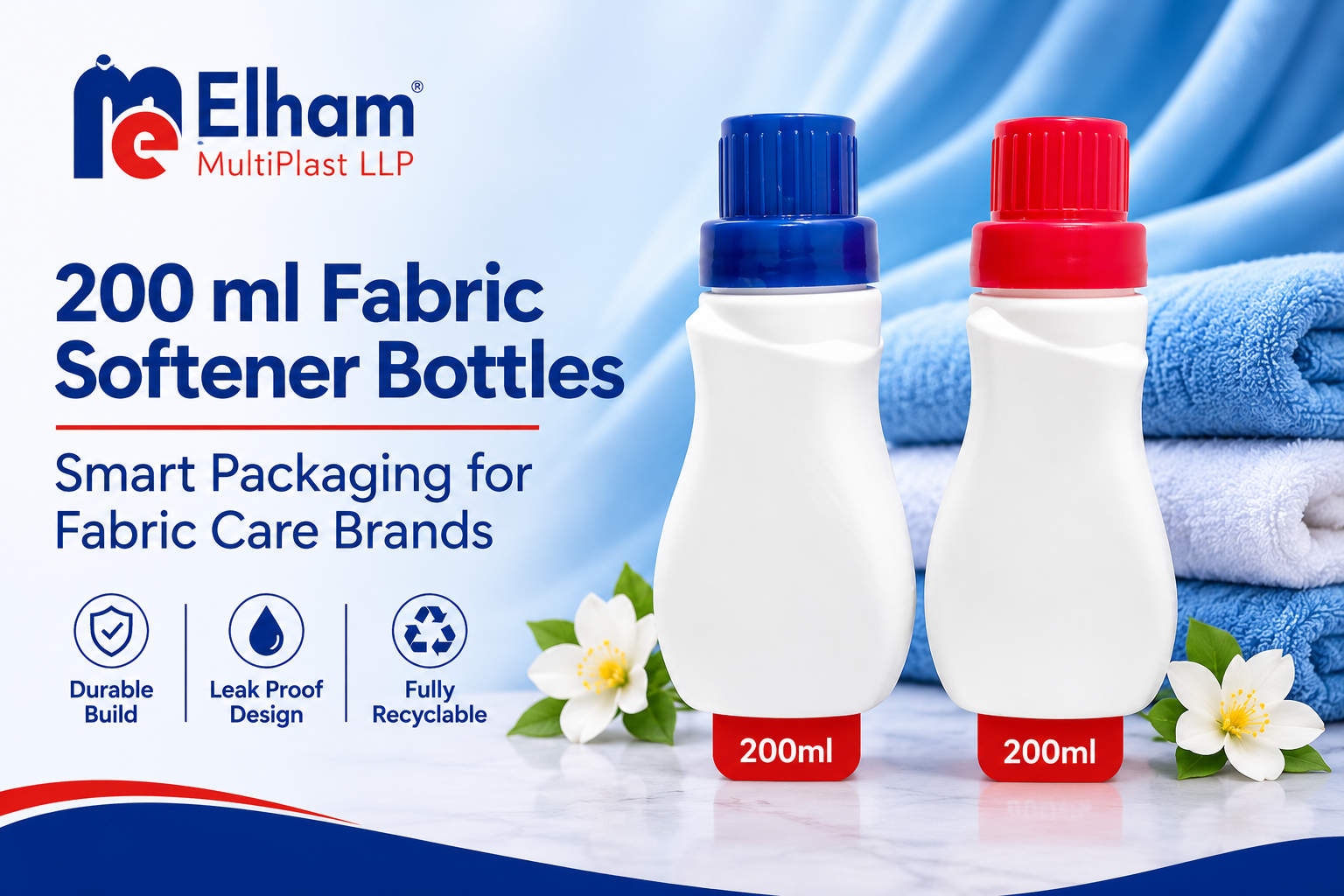
A fabric conditioner brand can win or lose a first purchase on a pack that costs a few rupees to make. The 200 ml fabric softener bottle is where that happens. It is the size a shopper picks up to try a new fragrance, the size a hotel keeps in a guest amenity kit, and the size a distributor stacks without worrying about shelf space. For brands that fill it, the bottle has to protect the fragrance, survive the truck and still look good next to a competitor.
This guide explains what makes a 200 ml fabric softener bottle work, why HDPE is the usual material, the fragrance and cracking issues that many packaging guides skip, and how to brief a manufacturer so that your first order matches what you approved. If you are a fabric care brand, a detergent manufacturer, an FMCG team or a packaging buyer, you can use it as a working checklist.
Quick answer: what is a 200 ml fabric softener bottle?
A 200 ml fabric softener bottle is a small format container, usually made from high density polyethylene (HDPE) by extrusion blow moulding, designed to hold liquid fabric softener or conditioner. It is closed with a screw cap, often with a tamper evident seal, and is used for trial packs, travel packs, hospitality supplies and entry level price points. The same bottle is also sold as a 200ml after wash bottle or a 200ml fabric conditioner bottle, because the three names describe the same kind of product.
Why 200 ml has become a serious format for fabric care
For years, softeners were sold mainly in large bottles and refill pouches. Smaller packs now do a different job. Market research on India’s fabric softener category notes that in a price sensitive market, small packs and trial sizes encourage first time use, and that brands compete on fragrance, affordability, pack size and availability. Overall, India’s fabric washes and care market was estimated by IMARC Group at USD 5.7 billion in 2024, with growth forecast to continue through 2033.
A 200 ml pack suits several real buying situations:
Trial and sampling. A shopper who has never used a softener will rarely commit to a litre. A low-priced bottle lowers that barrier.
Kirana and general trade. Small shops prefer packs that sell quickly at a price point customers carry in their pockets.
Bundles and combo packs. A 200 ml bottle fits alongside a detergent in a promotional carton without changing the pack footprint much.
Hospitality and travel. Hotels, hostels and laundries use small formats for rooms and guest kits.
Concentrates. Some brands sell concentrated softeners where a small bottle covers many washes. One concentrate on the market, for example, recommends about 5 ml per wash from a 200 ml bottle, which works out to roughly 40 washes. Your own dose will depend on your formulation.
If you are testing a new fragrance, a new region or a new price tier, a 200 ml bottle lets you learn with less stock risk than a litre pack.
Fabric softener, fabric conditioner, after wash: are they different bottles?
They are the same product in different words. Fabric softener is the global term. Fabric conditioner is common in the UK and India, and after wash is the phrase, many Indian shoppers use for the step that comes after the main wash. For packaging, the name does not change the bottle. What matters is the formulation inside it: fragrance level, surfactant type and viscosity. That is why a good supplier will ask about your liquid before recommending a bottle.
If you want to see how one manufacturer lists these sizes, our range includes a 200ml fabric softener bottle, a 200ml after wash bottle and a 200ml fabric conditioner bottle.
Why HDPE is the standard material for fabric softener bottles
HDPE is not the only option, but it is the practical default for household liquids. These are the reasons packaging teams keep returning to it.
| Property | Why it matters for fabric softener |
| Impact strength | The bottle survives drops in cartons, forklifts and courier handling |
| Chemical resistance | Handles the water based, mildly acidic or neutral formulas common in softeners |
| Opaque or tinted options | Shields colour and fragrance from light |
| Blow moulding efficiency | Suits high-volume, low-cost production, which matters at a 200 ml price point |
| Recyclability | HDPE bottles with PP caps are widely accepted in plastic recycling streams |
| Weight control | Small bottles can be lightweighted without losing the shape consumers expect |
HDPE also pairs well with polypropylene caps, which is the combination most fabric care brands use. For a wider look at how HDPE behaves with different chemistries, read our guide to HDPE bottle packaging for chemicals.
The issue most guides skip: fragrance and the bottle wall
Fabric softener is sold on fragrance. That makes the bottle wall more important than it looks.
Patent literature from household product companies describes a known effect. When water-based fabric treatment products with surfactant and perfume sit in conventional HDPE bottles, some hydrophobic perfume ingredients, those with a ClogP of about 3 or greater, can be lost by migrating into or through the polyethylene. When that happens, the scent changes from what the perfumer designed. The same documents describe workarounds such as bottles with an inner layer of nylon, PET or fluorinated HDPE.
What does this mean for a brand owner?
Not every fragrance is affected equally. A perfume built mostly from lighter ingredients behaves differently from a heavy floral or woody blend.
A 200 ml bottle has a high surface area compared with the volume it holds, so small packs can be more exposed than large ones.
The fix is testing, not guessing. Age filled bottles at room temperature and at an elevated temperature, then compare fragrance and weight with a control sample kept in glass.
If a stability issue appears, ask your supplier about wall thickness, resin grade, multilayer options or a barrier treatment before you change the perfume.
A supplier who raises this question early is usually one who has seen it in practice.
Stress cracking: why softener bottles can fail weeks later
HDPE is tough, but it can suffer environmental stress cracking when stress and certain liquids act together. Surfactants and fragrance oils are common triggers, and heat speeds the process up. The result is a fine crack near the base, shoulder or neck that appears after filling, often during warehouse stacking or summer transport.
You can lower the risk by choosing a resin with good stress crack resistance for your formula, keeping wall thickness even, avoiding sharp corners in the design, and running accelerated ageing on filled bottles. Lower density resins and lower melt flow grades generally resist this better, but the right answer for your product comes from a test on your own liquid.
Design features that make a good 200 ml fabric softener bottle
A small bottle leaves little room for error. These are the details worth reviewing on a drawing or sample.
A simple checklist before you place an order
| Item to confirm | What to ask or check |
| Fill volume and headspace | Brimful capacity versus the 200 ml you actually fill, so foam and heat expansion have room |
| Bottle weight | Stated in grams, with a tolerance |
| Resin and cap material | HDPE bottle with PP cap, or other combinations |
| Neck finish and closure | Drawings of both, checked against each other |
| Liner or seal | Induction seal, pulp wad or another type, matched to your liquid |
| Colour | Bottle and cap colours, and whether pigment affects the formula |
| Compatibility test | Filled bottles aged at room and elevated temperature |
| Drop and leak test | Filled, capped and sealed samples, not empty ones |
| Labelling | Pressure sensitive label, shrink sleeve or print, tested wet |
| Lead time and MOQ | For stock bottles and for custom designs |
Stock bottle or custom bottle?
At 200 ml, the choice depends on volume and how much you want your pack to stand out.
Our article on custom vs stock bottles walks through this decision in more detail.
What affects the price of a 200 ml fabric softener bottle
Quoted prices will vary by supplier and by resin market, so use these as the levers to compare rather than as a price list.
Resin weight. Every extra gram costs money across thousands of bottles.
Cap and liner. Closures can account for a surprising share of total pack cost.
Colour. Custom masterbatch adds cost and minimum quantity conditions.
Tooling. Stock moulds avoid it. Custom moulds carry it.
Order size and packing. Carton design and pallet pattern affect freight.
Quality checks. A supplier who tests torque, leakage, drop and burst strength is spending time that a bare minimum quote does not include.
Sustainability without compromising the bottle
Brands are under pressure to show progress on plastic, and small bottles are visible. Practical steps include lightweighting where testing allows, using a single polymer family (HDPE bottle with PP cap) so that sorting is simpler, avoiding unnecessary labels or sleeves that complicate recycling, and discussing recycled content with your supplier if your formulation and regulations allow it. Recycled resin changes stress crack and odour behaviour, so treat it as a controlled trial, not a quick switch.
How to choose a manufacturer for fabric care bottles
Check the range. A supplier that already makes detergent, dish wash and softener bottles understands foam, fragrance and surfactants.
Ask about testing. Torque, leakage, drop and burst checks should be routine, and they should be willing to share what they measure.
Request samples. Fill them with your product, cap them on your line and age them.
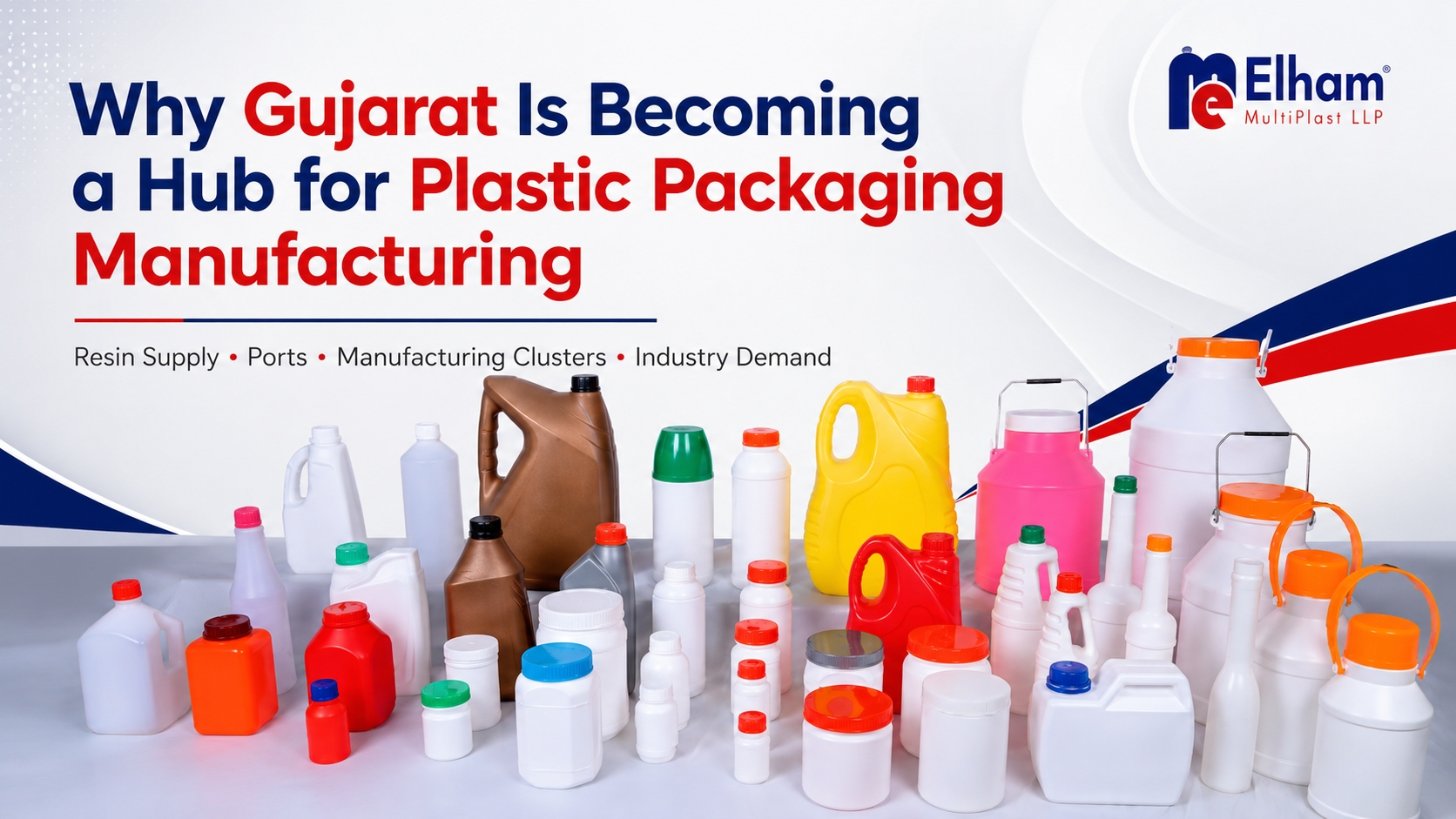
Look at capacity and location. Two production units reduce the risk of delay. Gujarat has become a strong base for plastic packaging, and we explain why in our article on Gujarat as a hub for plastic packaging.
Read the wider checklist. Our guide to choosing a plastic bottle manufacturer in India covers the questions buyers often forget.
An illustrative example: the launch that lost its scent
This is a hypothetical scenario, not a client case, but it reflects a pattern packaging teams describe.
A brand launches a 200 ml floral fabric conditioner in a standard white HDPE bottle. The lab sample smelled right. Three months later a retailer reports that the product smells flatter than the competitor next to it, and a few bottles show fine cracks at the base.
Neither problem came from the factory. The brand had approved the bottle on an empty sample, never aged a filled pack, and never compared fragrance against a glass control. The fix is routine: filled bottle ageing, a resin choice with better stress crack resistance, a check on wall thickness at the base and a decision on whether the perfume needs a barrier option. Done before launch, it costs a few weeks. Done after, it costs a recall conversation.
How Elham MultiPlast supports fabric care brands
Elham MultiPlast LLP manufactures HDPE, PET and PP bottles and jars from two units in Himatnagar and Surat, Gujarat. Our fabric care range includes the 200 ml fabric softener bottle, 200 ml after wash bottle and 200 ml fabric conditioner bottle, with 250 ml and 1 litre sizes announced as coming soon, and larger 500 ml and 1 litre fabric softener bottles already listed. The bottles sit within our wider range of liquid detergent bottles, so a brand can keep detergent, dish wash and softener packs with one supplier.
Our process includes torque, leakage, drop and burst strength checks, which you can read about on our quality assurance page. We work with stock and custom bottles, and we serve clients across more than 27 countries according to our company profile. One client described our packaging as holding up even with frequent transportation, which is the outcome we plan for.
If you are planning a new softener launch, share your formulation type, fill volume, closure preference and target colour, and we will help you shortlist a bottle worth testing. You can request a quotation and samples or browse the full product range.
Frequently asked questions
What is a 200 ml fabric softener bottle used for? It is used for trial packs, entry level retail packs, hospitality and travel kits, and concentrated softeners. It lets a brand sell at a low price point while keeping a full branded pack.
Is HDPE safe for fabric softener? HDPE is widely used for household liquids, including fabric softeners, because it resists most water-based formulas and handles impact well. Fragrance loss and stress cracking can still occur with some formulations, so test your filled bottle before launch.
What is the difference between a fabric softener bottle and a fabric conditioner bottle? There is no difference in the bottle itself. The two names describe the same product category, and the after-wash bottle is the same format under a regional name.
Can fabric softener be stored in a plastic bottle? Yes. Most fabric softeners are sold in plastic bottles, usually HDPE. Choose a bottle tested against your specific formulation, and keep it away from direct heat.
How many washes does a 200 ml bottle give? It depends on dosage. A concentrated product dosed at 5 ml per wash gives about 40 washes, while a standard softener with a larger dose gives far fewer. Follow your own label dosage.
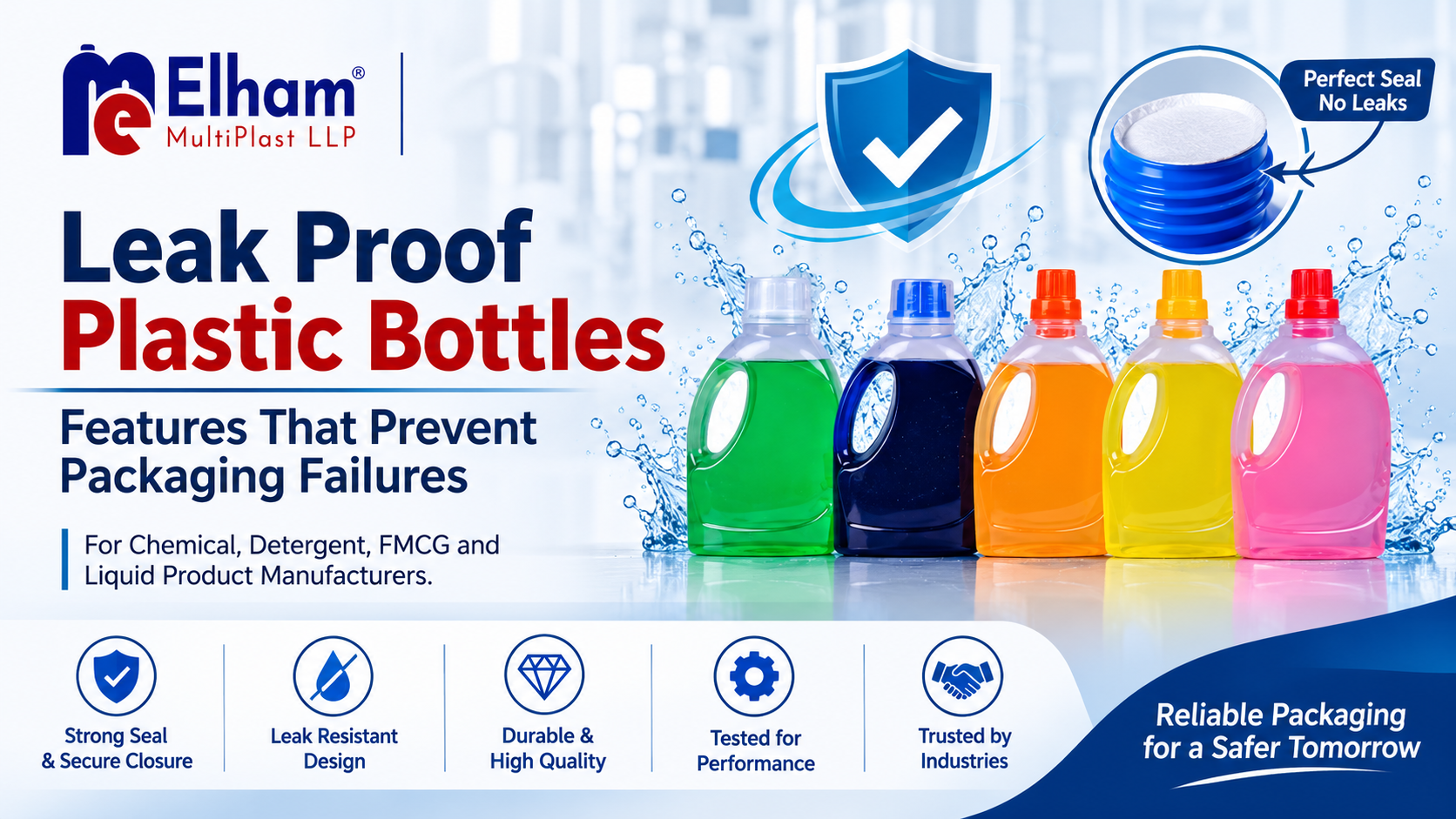
How do I stop a fabric softener bottle from leaking? Match the neck finish and cap, use a suitable liner or induction seal, set a validated torque, and test filled bottles for leaks and drops. Our guide on leak proof plastic bottles covers this in depth.
Why does my fabric softener lose its smell in the bottle? Some hydrophobic fragrance ingredients can migrate into or through HDPE walls over time. Ask your supplier about wall thickness, barrier options and ageing tests with your fragrance.
Can I get a custom colour or shape for a 200 ml bottle? Yes, custom colours and shapes are possible, usually with minimum quantities and tooling conditions for new shapes. Discuss your volume early so the supplier can advise on stock versus custom.
Are fabric softener bottles recyclable? HDPE bottles with PP caps are generally accepted in plastic recycling streams, though local collection varies. Keeping the pack to one polymer family and limiting extra labels helps.
Final thoughts
A 200 ml fabric softener bottle looks simply, and that is why it is easy to under specify. The right bottle protects fragrance, resists cracking, closes reliably and carries your brand cleanly. Get the weight, closure and resin right, test filled bottles instead of empty ones, and pick a supplier who is comfortable discussing the details. That conversation is where a good fabric care pack is made.
200 ml Fabric Softener Bottles: The Ideal Packaging Solution for Fabric Care Brands
November 17, 2026
Leak Proof Plastic Bottles: Features That Prevent Packaging Failures
November 13, 2026
What Makes a Good Pesticide Bottle? Key Packaging Features to Consider
November 10, 2026
Why Gujarat Is Becoming a Hub for Plastic Packaging Manufacturing
October 24, 2026
HDPE Bottle Packaging for Chemicals: Key Benefits and Safety Considerations
October 22, 2026
Custom vs Stock Bottles: Which Is Better for Your Business?
October 22, 2026