Plastic Jars for Every Industry: Uses, Sizes and Benefits
October 5, 2026
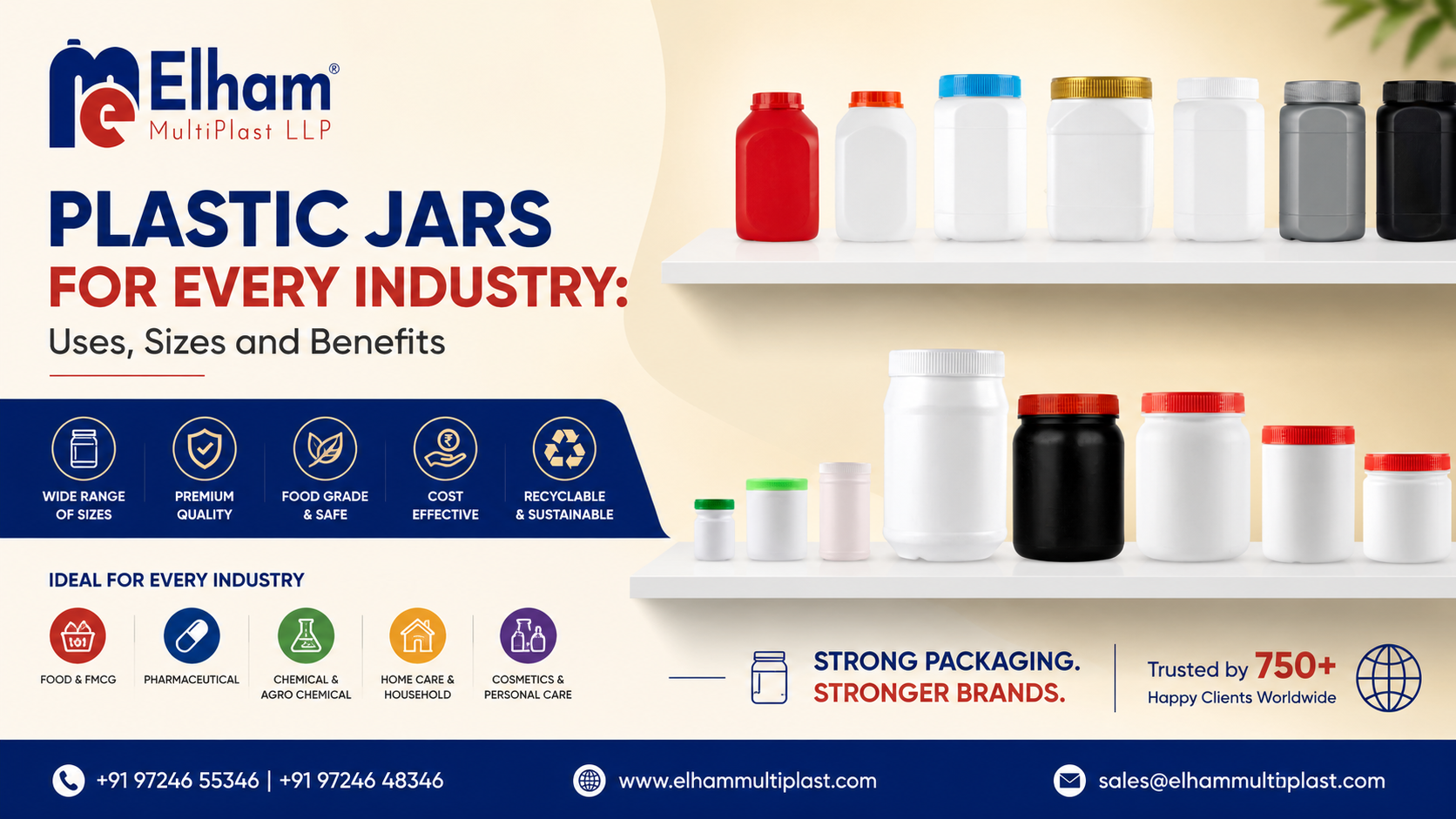
A jar is rarely just a jar. For a food brand, it is the difference between a product that survives a 500-km truck ride and one that arrives with a cracked lid. For a pharma company, it is the barrier standing between a capsule and the moisture in the air. For a household-products brand, it is what a customer touches first, before they ever try what’s inside.
That is why sourcing decisions around plastic jars deserve more thought than most buyers give them. This guide breaks down what plastic jars actually do across industries, how sizes and materials are chosen in practice, and what separates a dependable plastic jar manufacturer from a supplier that only looks the part on a catalogue page.
In manufacturing terms, a plastic jar is a wide-mouth, self-standing container, typically with a screw-neck finish, designed for products that are scooped, spooned, or poured rather than squeezed. This is what separates it from a bottle, which usually has a narrower neck built for pouring liquids in a controlled stream.
Jars are produced mainly through two processes:
Most commercial buyers don’t need to know the machinery, but knowing which process your supplier runs tells you a lot about the sizes and finishes they can realistically deliver at scale.
This is usually the first real decision a buyer has to make, and it shapes everything else: cost, shelf appeal, and shelf life.
| Property | PET Jars | HDPE Jars | PP Jars |
| Appearance | Naturally clear, glass-like shine | Opaque, matte finish | Semi-opaque, glossy |
| Best for | Products that benefit from visibility (pickles, honey, dry fruits, confectionery) | Products needing light protection and chemical resistance (powders, detergents, agro-chemicals) | High-heat or hot-fill contents, caps, closures |
| Moisture barrier | Moderate | Strong | Moderate |
| Chemical resistance | Good against oils, dilute acids | Excellent against acids, alkalis, solvents | Very good |
| Stress-crack resistance | Higher | Lower under sustained stress | High |
| Typical cost | Slightly higher | Generally most economical at scale | Mid-range |
| Recyclability | Widely recycled (RIC 1) | Highly recycled, single-polymer (RIC 2) | Recyclable (RIC 5), less commonly collected |
If the buyer’s priority is shelf presence and letting the product sell itself through the pack, PET wins. If the priority is protecting a moisture-sensitive or chemically active product at the lowest landed cost, HDPE is usually the better call. A serious PET bottles manufacturer will be transparent about this trade-off rather than pushing one material for every use case.
The same basic jar shape gets engineered differently depending on what it needs to hold. Here’s how demand breaks down across sectors.
This is the largest volume category for food storage jars. Pickles, ghee, honey, spices, dry fruits, protein powders, and confectionery all move through wide-mouth jars because the product needs to be scooped or the packaging needs to show off colour and texture. Food-grade jars here must meet non-toxic, migration-safe standards, since the plastic is in direct, extended contact with edible contents.
Agro-inputs, pesticides, and specialty chemical powders need jars with tight chemical compatibility, since a jar that reacts with its own contents is a safety and liability issue, not just a packaging one. This is where HDPE’s resistance to acids, alkalis, and solvents matters more than clarity. See our dedicated line of agro-chemical and pesticide bottles for how this is engineered at production scale.
Dishwash gels, cleaning powders, and bulk detergent formats increasingly use large-format PET jars instead of traditional bottles, because a wide mouth makes refilling and dispensing easier for high-viscosity products. Our recently launched 4.5 litre PET jar, engineered as a 5-litre cut-size dish-wash format, is a direct response to this shift toward bulk home-care packaging.
Capsules, tablets, and powdered supplements need tamper-evident closures and low moisture permeability, since even small amounts of humidity can degrade active ingredients over a product’s shelf life. HDPE is the default choice here for its superior moisture barrier.
Creams, scrubs, hair masks, and gels are typically packed in smaller injection-moulded jars where wall thickness, lid seal, and finish quality directly affect perceived product value on a retail shelf.
Buyers frequently underestimate how much size selection affects cost per unit, logistics, and even shelf placement. Here is a general size reference used across Indian plastic packaging manufacturing:
| Size Range | Typical Use Case |
| 50 ml to 100 ml | Sample packs, single-use cosmetics, small spice jars |
| 200 ml to 500 ml | Retail-size pickles, honey, protein blends, cream jars |
| 500 g to 1 kg | Ghee, bulk spices, confectionery, institutional food packs |
| 1 litre to 2 litre | Bulk dishwash, industrial adhesives, veterinary powders |
| 4.5 litre to 5 litre | Bulk home-care liquids, wholesale/B2B refill formats, catering-size food packs |
Sizes above 2 litres are increasingly requested by home-care and institutional-food buyers who want to cut down on per-unit packaging cost and reduce the number of SKUs moving through the supply chain. If your product falls in this bracket, it’s worth asking your supplier directly whether they already tool for large-format PET, since many manufacturers only stock smaller sizes and have to sub-out anything above 2 litres.
This decision comes up constantly and is worth settling early in the sourcing process:
Choose wide mouth plastic jars when the product needs to be scooped, is semi-solid, or has visible pieces (pickles, dry fruits, powders, creams). Wide openings also make cleaning and refilling easier for repeat-purchase household products.
Choose narrower-neck jars or bottles when the product is a free-flowing liquid that needs pour control, or when a lower cap size reduces material cost across very high production volumes.
A good rule of thumb: if a customer would ever need a spoon to get the product out, it belongs in a wide-mouth jar.
Buyers sourcing on price alone often end up paying more later, through returns, damaged shipments, or regulatory rejections. The real return on investing in properly engineered jars shows up in a few concrete ways:
Fewer transit losses: uniform wall thickness and tested drop-resistance reduce breakage during long-haul transport, which is a real cost for brands shipping across states or exporting.
Longer shelf life: the right material-to-product match (HDPE for moisture-sensitive powders, PET for oil-based or acidic contents) slows degradation and extends usable shelf life.
Regulatory compliance: food-grade and pharma-grade jars need documented resin traceability to pass FSSAI or similar audits without delay.
Brand perception: a jar with a clean seam, consistent colour, and a secure cap reads as a premium product even before a customer opens it.
Lower total cost at scale: working with a bulk bottle supplier that can run both stock and custom sizes on the same tooling reduces the need to juggle multiple vendors for different SKUs.
Not every “manufacturer” listed online actually runs their own moulding lines, some are traders repackaging third-party stock. Before finalising a supplier, it’s worth checking for:
In-house tooling and production – not just a trading desk with a product catalogue.
Material certification – documented resin grade and food-grade or pharma-grade compliance where applicable.
In-house testing – drop testing, leak testing, and dimensional inspection done on the actual production line, not outsourced.
Customisation support – colour matching, embossing, and label-ready finishes without a steep minimum order.
Multiple plant locations – reduces single-point production risk and usually means shorter lead times.
Export experience – relevant if you’re shipping outside India, since packaging needs to survive longer transit and customs handling.
Elham MultiPlast LLP runs its own moulding facilities in Himmatnagar and Surat, Gujarat, producing both stock and custom HDPE and PET jars for food, pharma, chemical, and home-care brands across India and 27+ export markets. Our plastic jars range covers sizes from 50 ml up to bulk formats like the 4.5 litre PET jar, with in-house quality checks on every batch before dispatch.
What is the difference between a PET jar and an HDPE jar?
PET jars are naturally clear and are chosen when shelf visibility matters, such as for honey, pickles, or confectionery. HDPE jars are opaque, offer a stronger moisture barrier, and are generally preferred for powders, chemicals, and light-sensitive products.
What size plastic jar is best for bulk or wholesale packaging?
For bulk home-care liquids or institutional food packs, 4 litre to 5 litre formats, such as a 4.5 litre PET jar, are commonly used, as they reduce packaging cost per litre and cut down on the number of SKUs a buyer needs to manage.
Are plastic jars from Indian manufacturers export-compliant?
Reputable manufacturers produce jars using food-grade or pharma-grade certified resin and can supply documentation needed for export compliance, though specific requirements vary by destination country and product category.
Can plastic jars be customised with brand colours and logos?
Yes. Most manufacturers offer custom bottle and cap colours, embossing, and label-ready surfaces, though customisation options and minimum order quantities vary by supplier and jar size.
How do I know which jar material suits my product?
Match the material to your product’s sensitivity: choose HDPE for moisture- or chemical-sensitive products, PET for products that benefit from visual appeal, and PP for items requiring higher heat resistance, such as hot-fill contents.
Choosing a plastic jar isn’t just a packaging decision, it’s a product-protection and brand decision rolled into one. Whether you’re sourcing 200 ml cream jars or scaling up to bulk 4.5 litre formats, the right combination of material, size, and manufacturing partner determines whether your product reaches the shelf intact, compliant, and looking the way it should.
If you’re evaluating a plastic jar manufacturer in Gujarat for your next production run, get in touch with our team for samples, size charts, or a custom quote.
Plastic Jars for Every Industry: Uses, Sizes and Benefits
October 5, 2026
Lubricant and Coolant Bottle Packaging: What Manufacturers Need to Know
October 5, 2026
Sustainability in Plastic Packaging: How Elham MultiPlast Is Adapting
September 30, 2026
From Design to Delivery: The Bottle Manufacturing Process Explained
September 30, 2026
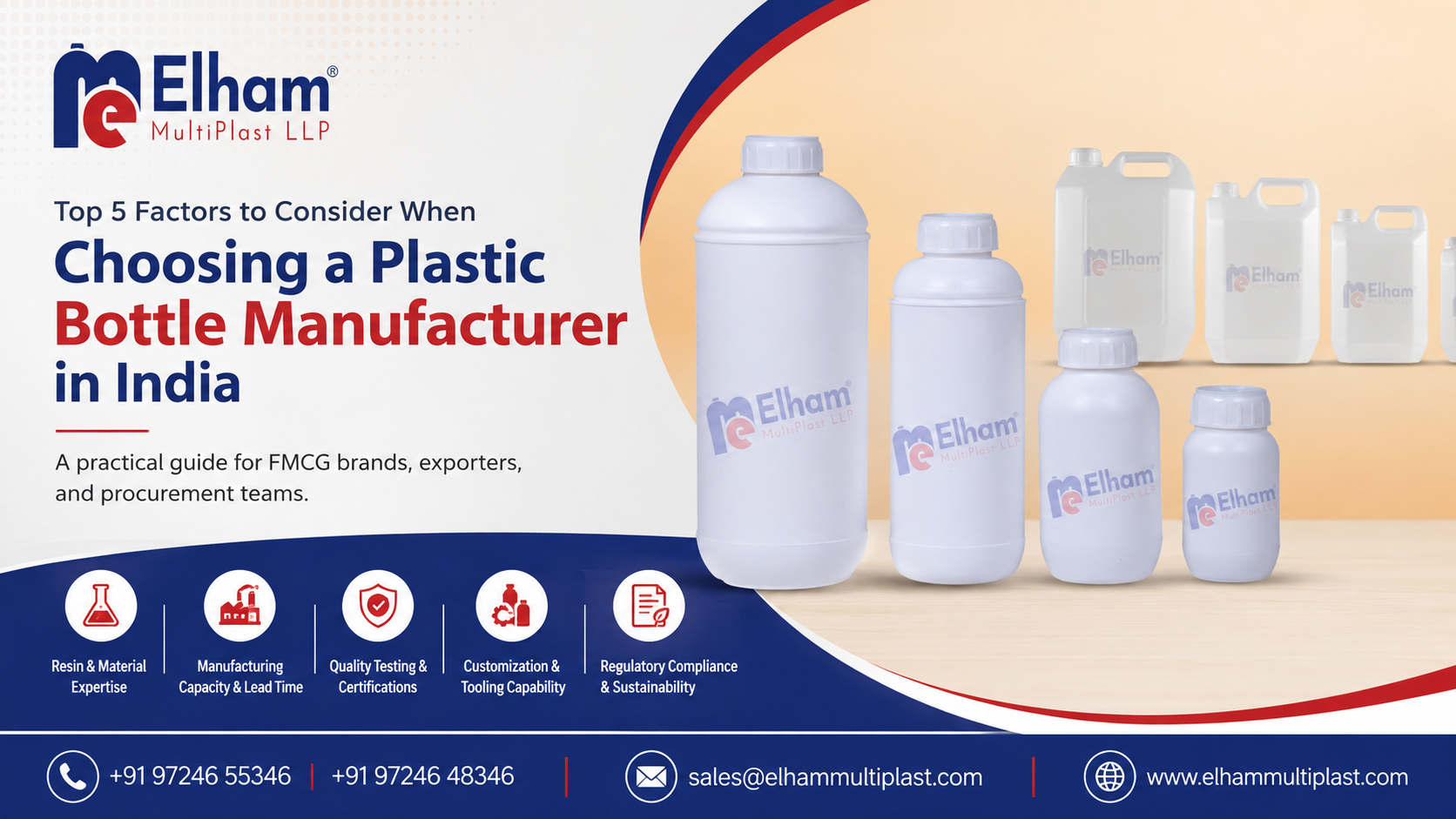
Top 5 Factors to Consider When Choosing a Plastic Bottle Manufacturer in India
September 30, 2026
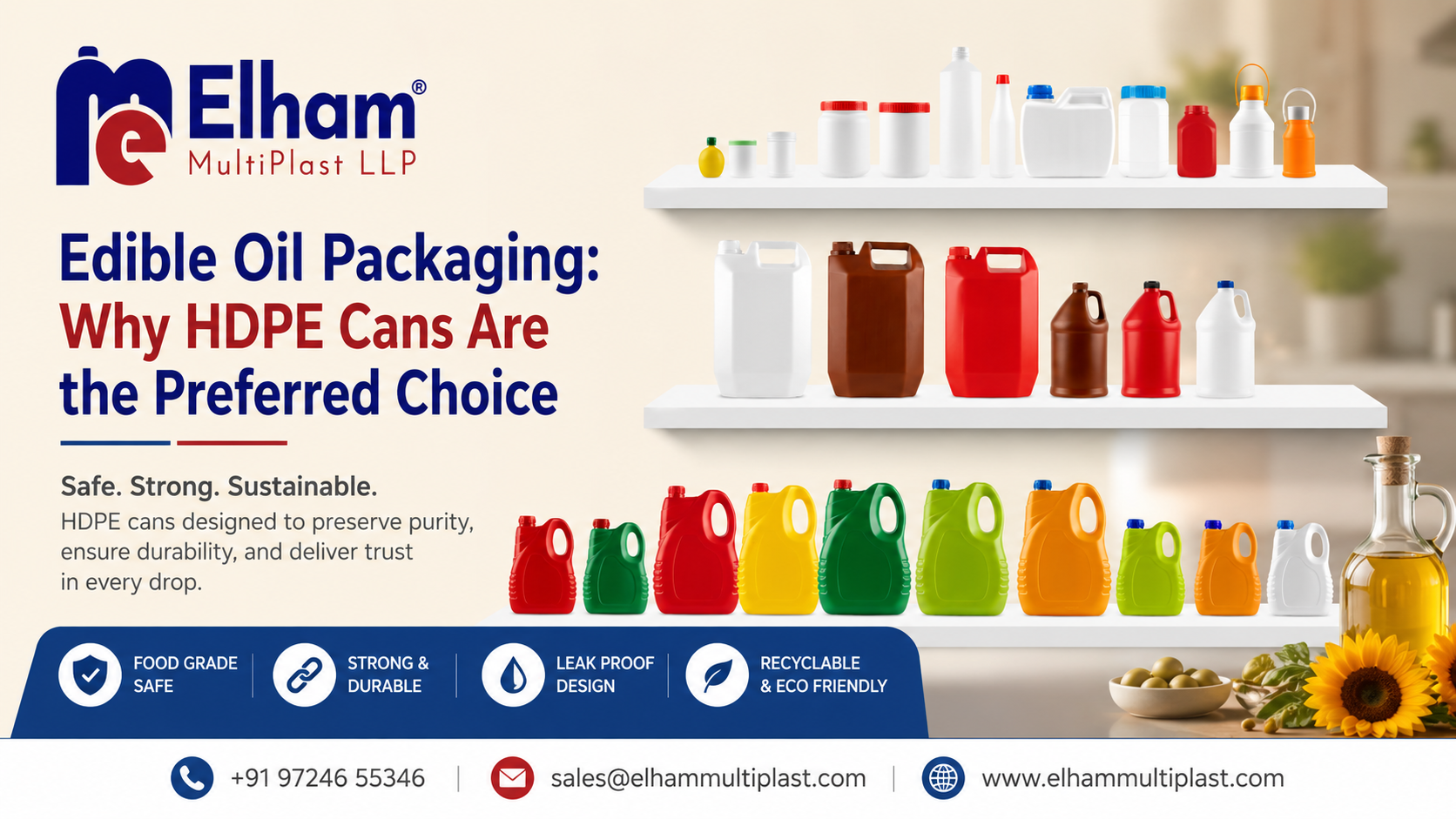
Edible Oil Packaging: Why HDPE Cans Are the Preferred Choice
September 28, 2026