Liquid Detergent Bottles with Measuring Cups: Benefits for Accurate Dispensing and Packaging
November 26, 2026
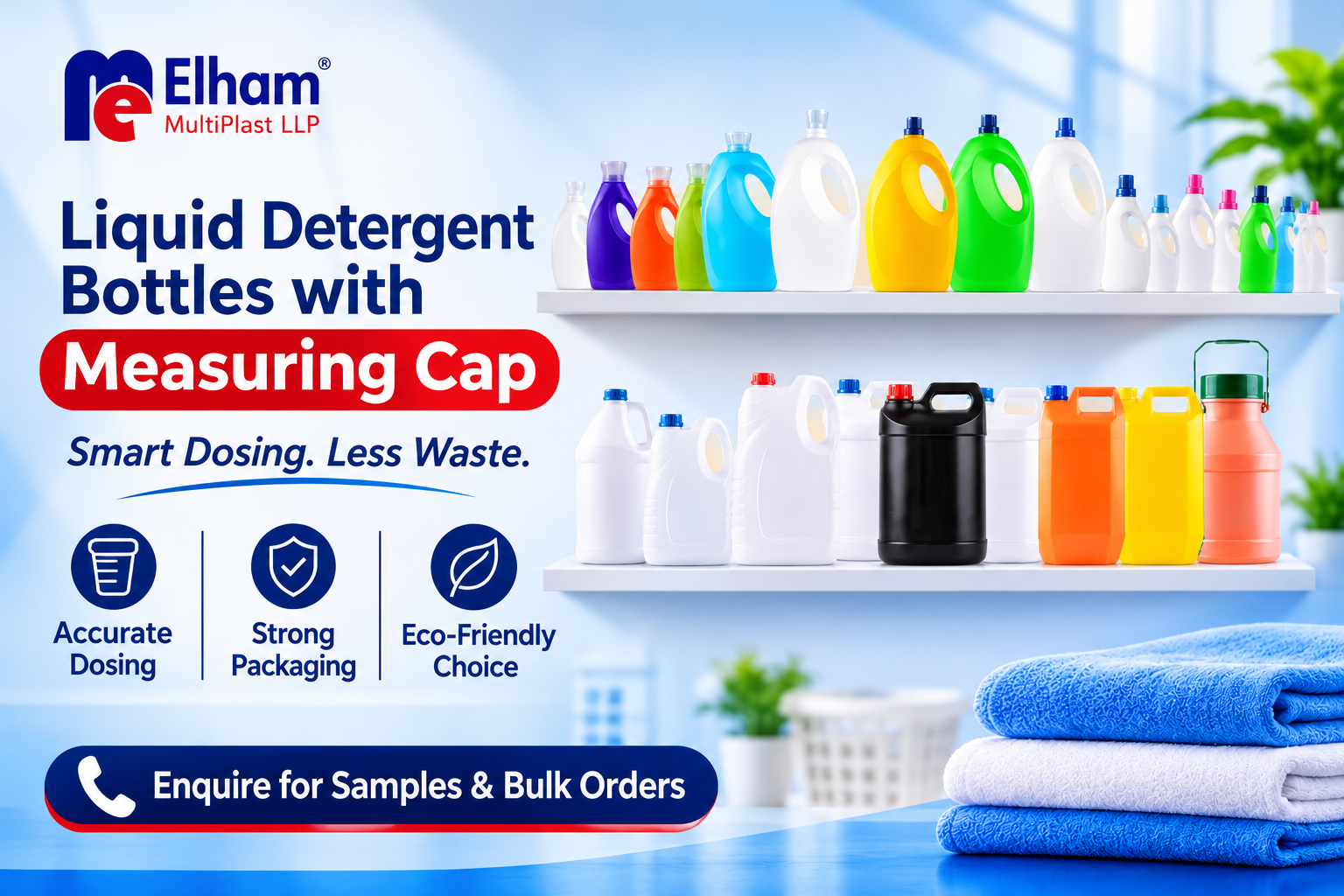
Every liquid detergent brand has the same quiet problem. Customers pour by eye. Some use too little and decide the product is weak. Others use too much, finish a bottle in half the expected time and blame the price. A well designed liquid detergent bottle with measuring cup fixes much of this before the customer ever reads the label, because the cap that closes the bottle is also the tool that doses it.
This guide is written for liquid detergent manufacturers, FMCG and laundry brands, and packaging distributors. It explains how measuring cap bottles work, what separates a good cap from a poor one, how knurling, neck finish and HDPE choice affect performance, and what to check before you approve a pack for production.
Quick answer: what is a liquid detergent bottle with a measuring cup?
It is a bottle, usually made from HDPE, that is closed by a cap shaped like a cup. When the cap is removed and turned over, it’s inside works as a dosing cup with graduated lines. The customer pours detergent up to the line shown on the label, adds it to the wash and screws the cap back on. A measuring cap bottle replaces a separate scoop, pump or cup with one part that is already in the customer’s hand.
Why dose accuracy matters to the brand, not just the customer
Dosing looks like a consumer habit, but it affects brand economics and reputation in ways that reach back to the packaging.
Product cost per wash. If the recommended dose is 30 ml, a 1 litre bottle gives about 33 washes. If customers drift to 45 ml because the cup has no clear lines, the same bottle gives about 22 washes. That is an illustration, not a measured result, but it shows how a 50 percent overpour turns into a one third drop in wash count and a faster repurchase cycle that feels like poor value.
Cleaning results. Underdosing leaves clothes less fresh and causes complaints that are blamed on the formula.
Residue and suds. Too much detergent can leave residue and extra rinsing, which customers also blame on the brand.
Sustainability claims. Concentrated and efficient formulas only deliver their promise when people dose correctly.
Consumer guides show how normal the measuring cup lid has become. One popular explainer notes that most major brand bottles include a measuring cup in the lid, and that shoppers do look for it. If your bottle has no clear dosing aid, customers compare it with ones that do.
Measuring cup, pump or separate scoop: which dosing method fits?
| Dosing method | Strengths | Watch out for |
| Measuring cap (cup in the closure) | No extra part, lowest added cost, familiar to shoppers | Residue in the cup, drips if the spout is poorly shaped |
| Pump dispenser | Fixed dose per stroke, tidy | Higher cost, pump clogging with thick or concentrated liquids, less suited to large doses |
| Separate scoop or cup | Larger and clearer scale possible | Gets lost, adds a part and a packing step |
| Pour only, with no dosing aid | Cheapest closure | Overdosing and underdosing, weaker brand experience |
For mainstream laundry liquids in the 500 ml to 5 litre range, the measuring cap is usually the best balance of cost, convenience and consumer familiarity.
Anatomy of a good measuring cap bottle
A bottle and cap should be designed as one system. These are the points worth reviewing on any drawing or sample.
The cap has to be large enough to hold the highest dose on your label with room to spare, so the customer can fill to the top line without spilling. Lines can be moulded into the cap or printed on it, and each has trade-offs. Moulded lines do not rub off, which matters in a wet laundry room. Printed lines can be sharper but need a process that survives detergent contact.
Match the lines to your pack instructions. If your label says one dose for a normal load and a higher dose for a heavy load, the cap should show both clearly. Do not use the same cap for a standard liquid and a concentrate unless the lines suit both.
Knurling means a pattern of fine ridges around the cap. Wet or soapy hands slip, and a smooth cap is hard to open and hard to tighten properly. A knurled edge gives the fingers something to hold, which makes opening easier and helps customers close the cap firmly. Firm closing matters because a loosely closed cap is a common cause of leaks in transport and on a shelf.
Elham’s liquid detergent range includes an Elham shape bottle with knurling cap, listed under shape code. It is offered in 500 ml, 1 L, 2 L, 3 L and 5 L sizes and is described as an ergonomic bottle with a knurling cap for better grip and precision pouring. If you need the cap to double as a measuring cup, discuss the cup volume and scale with the team when you request samples.
A measuring cap fails in daily use when detergent runs down the neck and collects around the thread. Look for a spout or neck design that lets the last drops flow back into the bottle, and a cap that does not trap a ring of liquid under it. This detail is hard to judge from a picture. You find it by pouring real detergent several times.
The cap and neck are made as a pair. Ask for both drawings together, because a cap that only nearly fits is behind many leak complaints. Where a liner or induction seal is used, it must match the formula. Our article on leak proof plastic bottles explains how neck finish, liner and torque work together.
The industry has also looked at closure design as a whole. Packaging World reported that Henkel developed an integrated spout and cap system for liquid laundry detergent, with a locking feature on the neck so the cap does not back off, and with elastomer sealing to limit leaks if a bottle is dropped. You may not need that level of engineering for a retail bottle, but the idea is useful: leak control and dosing are closure problems as much as bottle problems.
Laundry bottles are lifted, tilted and poured from at an angle, often with one hand. An ergonomic shape, a comfortable grip area and a stable base all help. For 3 L and 5 L sizes, weight is the main issue, so check how the bottle balances when it is full.
Dosing instructions need space. Make sure the label panel is flat or gently curved enough for clean application and large enough for dosing text, claims and legal details. A cap colour that contrasts with the bottle makes the measuring cup stand out as a feature on the shelf.
How sizes change the design: 1 L and 3 L
The same cap logic applies across sizes, but the use case changes.
1 L bottle: The everyday or trial size. It is picked up often, carried from shop to home and used by one household member at a time. Grip, a clear dose line and a tidy pour matter most.
3 L bottle: The family or value size. It is heavier, lasts longer and is more likely to be tilted against a shelf or tub edge. Pour control and bottle balance matter more, and the cap must survive months of repeated opening.
If you plan both sizes, keep the cap and its dose lines the same across them. Customers who switch from 1 L to 3 L should not have to relearn how to dose. A single cap design also lowers your mould and inventory complexity.
HDPE and detergent compatibility
HDPE is the standard material for liquid detergent bottles because it handles impact, resists most water-based cleaning formulas and works well with blow moulding at volume. Polypropylene is the usual choice for caps because it is stiff, handles repeated opening and gives a clean feel to the thread.
Two cautions apply to detergents in particular. Surfactants and fragrance oils can contribute to environmental stress cracking in HDPE under load or heat, so test a filled and sealed bottle, not just an empty sample. Strong fragrance, enzymes or high surfactant content can also change how the liner and cap behave over time. Our guide to HDPE bottle packaging for chemicals covers compatibility in more depth.
Concentrates and the case for a finer measuring cup
Laundry brands have been moving toward more concentrated liquids that deliver the same cleaning from a smaller dose and a smaller bottle. A smaller dose is harder to measure, because the same one centimetre of error is a much bigger share of the dose. If you sell a concentrate, you may need a smaller cup, finer lines or a different dosing method from a regular liquid. Treat the cap as part of the formula’s claim, not as a generic accessory.
Custom plastic packaging: what you can adjust
Brands often assume custom packaging means a full new mould. In practice there are layers of choice:
Colour. Bottle and cap colours can often be matched to your brand, subject to minimum quantities and terms.
Weight. Bottle and cap weight can be balanced between cost and strength for your size and formula.
Cap and dosing design. Cup volume and graduation lines can be specified to match your dose instructions.
Shape. A dedicated mould gives a bottle no one else has, and suits brands with the volume to justify tooling.
Decoration. Pressure sensitive labels, shrink sleeves and printed panels change how your pack looks on shelf.
Our comparison of custom vs stock bottles explains when each route makes sense. For a new brand, an existing stock shape with your own colours and label is often the fastest and lowest risk start.
To give a reference point on weight, the 2 L listing in Elham’s knurling cap range states a minimum bottle weight of 100 and a minimum cap and closure weight of 17, which we read as grams. Weight differences are one of the main reasons quotes for the same size can look so different, so compare like with like.
A checklist before you approve a measuring cap bottle
| Item | What to confirm |
| Cap cup volume | Large enough for the highest dose on your label, with headspace to avoid spills |
| Dose lines | Match the label text, and are readable when wet |
| Neck and cap drawings | Reviewed together, with tolerances |
| Liner or seal | Suitable for your surfactant and fragrance level |
| Drip control | Pour real detergent ten times and check the neck and thread |
| Bottle weight | Stated in grams, with a tolerance, and compared across quotes |
| Compatibility | Filled bottles aged at room and elevated temperature |
| Drop and leak tests | Done on filled and capped samples |
| Cap torque | A closing torque your filling line can hold and a customer can open |
| Label fit | Label applies cleanly and survives moisture |
| Colour | Bottle and cap colours approved on the final resin, not only on a screen |
An illustrative example: the cap that looked right on paper
This is a hypothetical scenario, not a client story, but it reflects a pattern that packaging teams describe.
A brand launches a 1 L liquid detergent with a measuring cap. The cap volume matches the label, so the artwork team approves it. Three weeks after launch, retailers report sticky bottles. Customers report that the lines in the cap are hard to read, and a few say the cap loosens in the bag on the way home.
The causes are ordinary. The spout did not drain well, so detergent collected around the thread. The graduation lines were shallow and low contrast. And the closing torque set on the filling line was higher than most customers could reproduce at home, so they under tightened. The fixes are cap design and testing choices that cost little at the sample stage and a great deal after launch.
Sustainability without losing function
Measuring caps can fit sustainability goals. Using HDPE for the bottle and PP for the cap keeps the pack in a small number of widely recycled polymers. Lightweighting can lower resin use where testing shows the bottle still passes drop and stack tests. Avoid adding extra labels, sleeves or mixed materials that complicate recycling unless they add real value. If you plan to use recycled content, treat it as a controlled trial, because it can change stress crack behaviour, odour and colour.
How to choose a supplier for detergent bottles with measuring caps
Look at their detergent range. A supplier that already makes laundry, dish wash and cleaner bottles knows foam, surfactants and cap behaviour.
Ask for bottle and cap together. Samples should include the actual closure, not a stand in.
Ask about tests. Torque, leakage, drop and burst checks should be routine. See how we approach this on our quality assurance page.
Check capacity and location. Two plants reduce the risk of a delay on a large order. Our piece on why Gujarat is becoming a plastic packaging hub explains the regional advantage.
Use a wider checklist. Our guide to choosing a plastic bottle manufacturer in India covers questions buyers often miss.
How Elham MultiPlast supports detergent brands
Elham MultiPlast LLP manufactures HDPE, PET and PP bottles and jars from two units in Himatnagar and Surat, Gujarat. Our liquid detergent range includes the Elham shape bottle with knurling cap in 500 ml, 1 L, 2 L, 3 L and 5 L sizes, and we supply custom and stock bottles with custom bottle and cap colours subject to terms. You can see the wider liquid detergent bottles category, or add a dish wash pack such as our 5 litre cut size dish wash bottle to the same supply plan.
If you are planning a new laundry liquid or refreshing an existing pack, tell us your fill volume, dose instruction, formula type and target colours. We will help you shortlist a bottle and cap worth testing. You can request a quotation and samples or download our catalogue from the products page.
Frequently asked questions
Do liquid detergent bottles come with a measuring cup? Most major brand bottles use a cap that doubles as a measuring cup, though some brands skip it. As a manufacturer, you can specify a measuring cap when you order the bottle and closure.
Why do detergent bottles have a measuring cap? It lets customers dose accurately without another tool. That reduces waste, improves results and keeps the brand’s wash count claims realistic.
How much detergent should go in the cap? The answer depends on your formula, load size and water conditions, and it should be printed on your label. The cap lines should match those instructions exactly.
What is a knurling cap on a detergent bottle? A knurling cap has fine ridges around its edge. They improve grip when hands are wet or soapy, make opening and closing easier and support firm tightening.
What is the best material for liquid detergent bottles? HDPE is the common choice for the bottle because of its impact strength and chemical resistance, and PP is the usual choice for the cap. Test your own formula in the filled pack before launch.
Can I use the same measuring cap for different bottle sizes? Often yes, as long as the neck finish is the same and the dose lines suit your instructions. A common cap across 1 L and 3 L bottles also keeps customers familiar with the dose.
How do I stop the cap from leaking or dripping? Match the neck and cap drawings, use a liner or seal suited to your formula, set a realistic closing torque, and test with filled bottles. Use a spout design that lets residue flow back into the bottle.
Can I get custom colours for the bottle and cap? Yes, custom bottle and cap colours are possible, with minimum quantities and terms. Discuss your volumes early so the supplier can recommend stock or custom options.
Are detergent bottles with measuring caps recyclable? HDPE bottles with PP caps are generally accepted in plastic recycling streams, though local collection varies. Keeping the pack to a small number of polymers helps.
Final thoughts
A measuring cup in the cap looks like a small feature, yet it shapes how customers dose, how long a bottle lasts and how they judge your product. Get the cap volume, dose lines, knurling, spout and neck fit right, test the filled pack and choose a supplier who will discuss those details openly. That is how a detergent bottle becomes part of the product experience instead of just a container.
Liquid Detergent Bottles with Measuring Cups: Benefits for Accurate Dispensing and Packaging
November 26, 2026
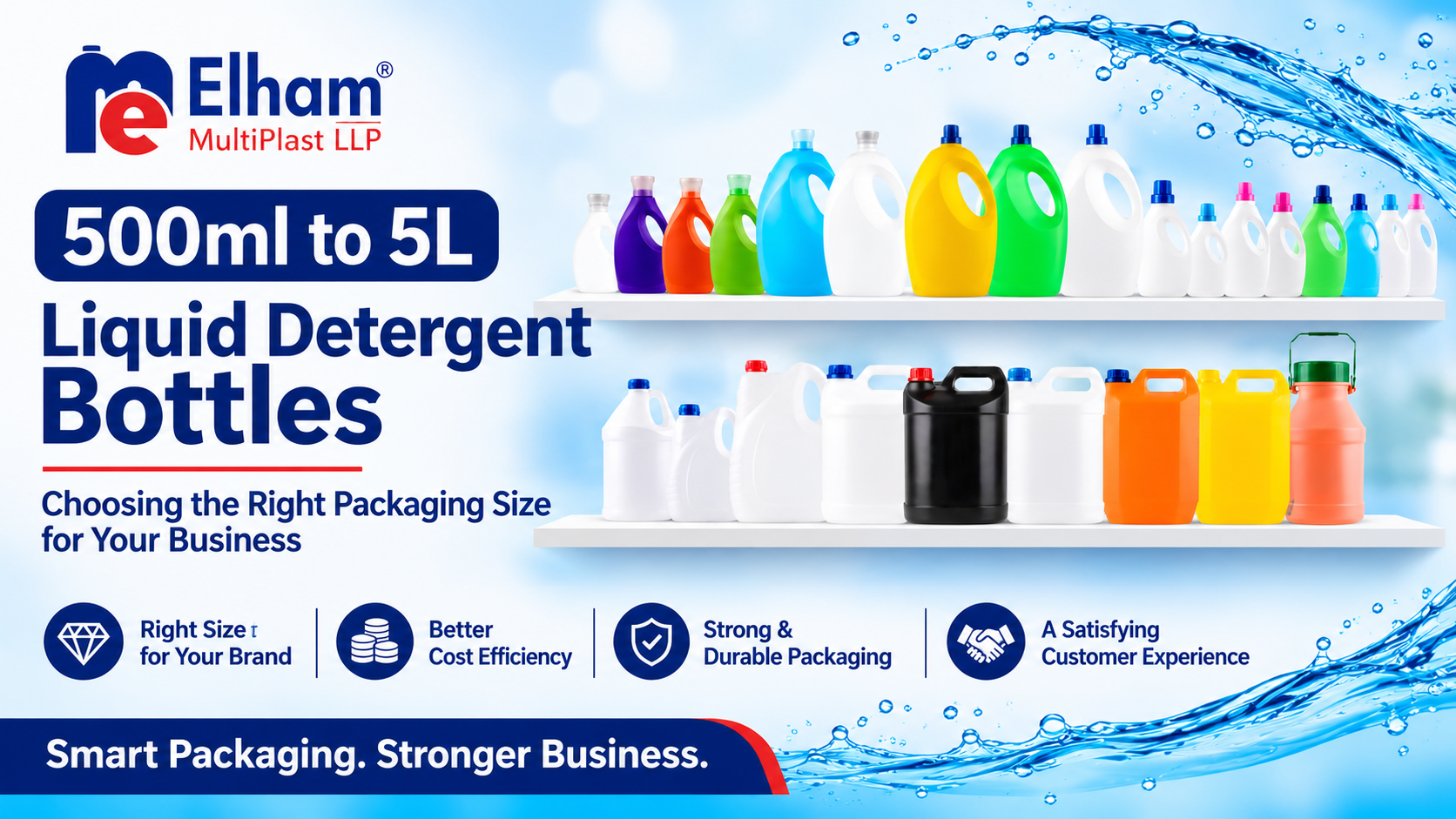
500ml to 5L Liquid Detergent Bottles: Choosing the Right Packaging Size for Your Business
November 24, 2026
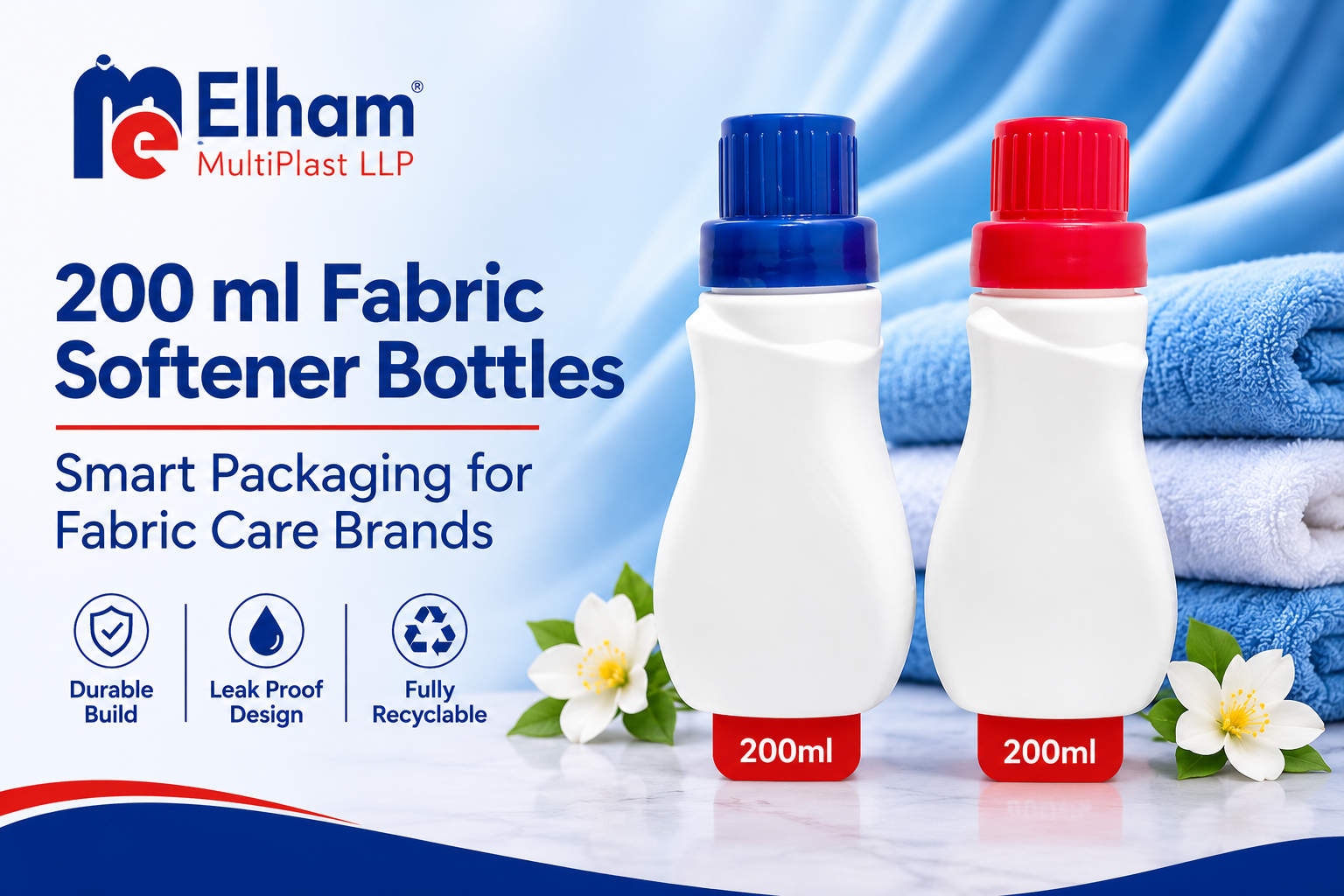
200 ml Fabric Softener Bottles: The Ideal Packaging Solution for Fabric Care Brands
November 17, 2026
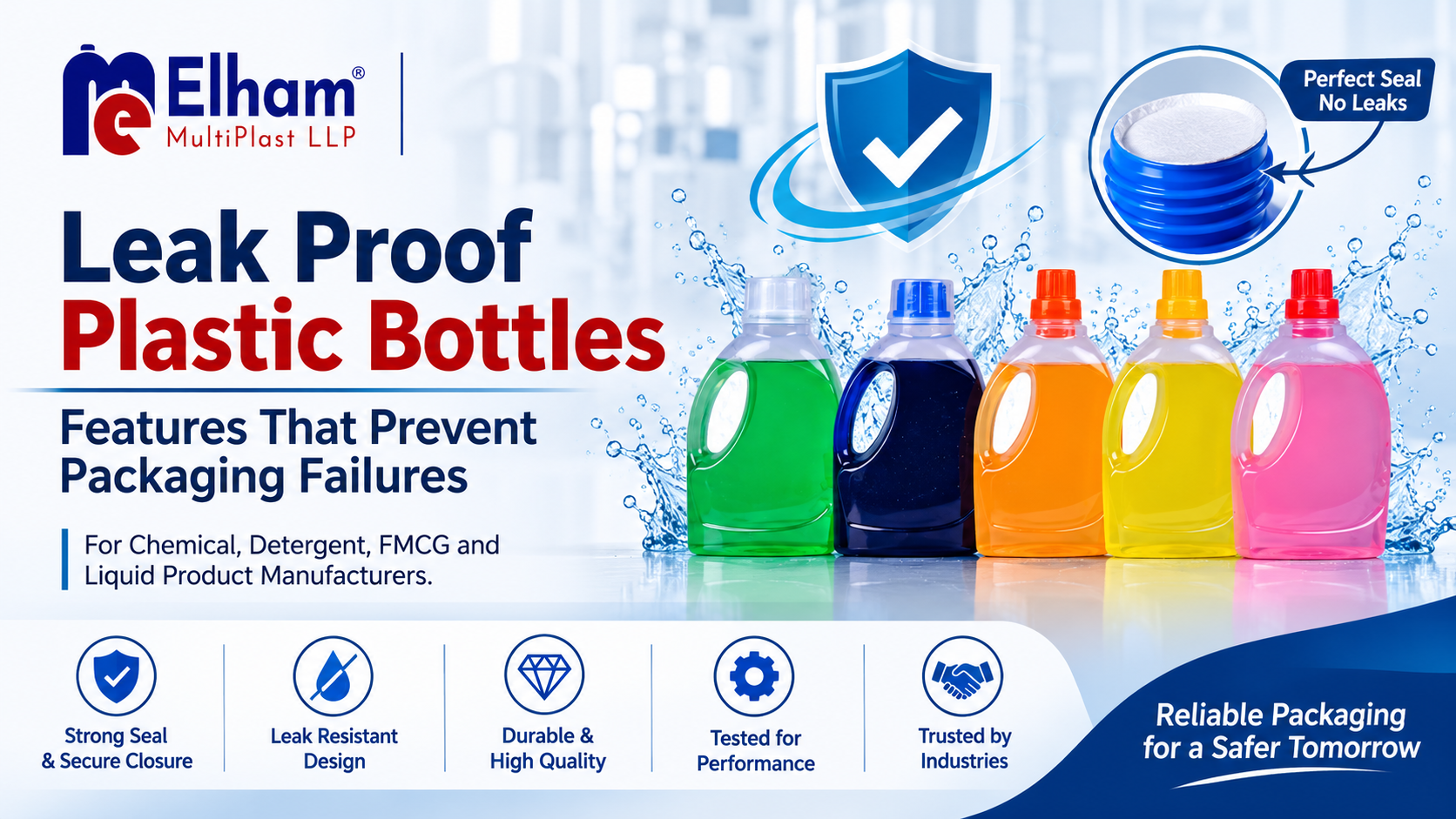
Leak Proof Plastic Bottles: Features That Prevent Packaging Failures
November 13, 2026

What Makes a Good Pesticide Bottle? Key Packaging Features to Consider
November 10, 2026

Why Gujarat Is Becoming a Hub for Plastic Packaging Manufacturing
October 24, 2026